
Hi. What are you looking for? Tell us what you need and we'll get back to you.
Anvils
Anvils for workshop mounting — cast or forged bodies designed to take impact without walking across the bench. Used for forming, straightening, rivet setting, and any job where you need a solid mass behind the work. Face hardness and overall weight determine what the anvil can handle without dishing or ringing itself loose.
Showing all 2 results
-
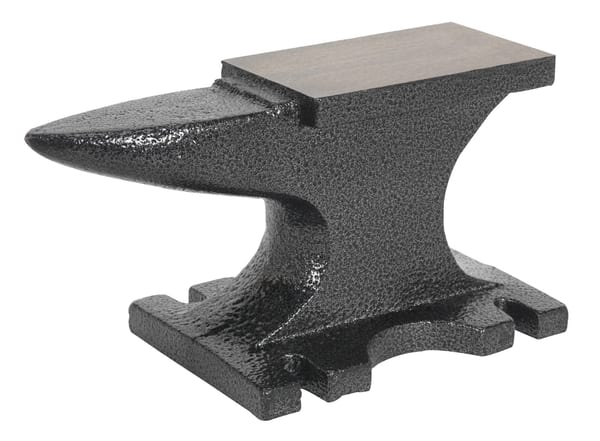 Not yet ratedSealeyBench Mounting Anvil
- Cast iron construction
- 115 x 68 mm work surface
- 5 kg, bench mounting
€53.21€53.75€43.26€43.70 -
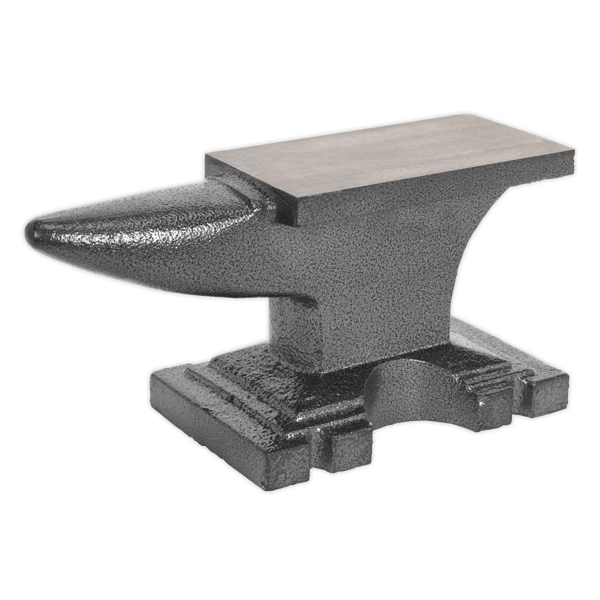 Not yet ratedSealeyBench Mounting Anvil
- Cast iron construction
- 170 × 90 mm working surface
- Single bick, rectangular face
€98.88€99.88€80.39€81.20
Bench-mounted anvils differ mainly in weight, face material, and how they fix down. Lighter castings (under 10 kg) suit panel work and light forming; heavier forged models (25 kg and up) absorb hammer energy better and stay put under repeated blows. The face should be harder than what you're working — a soft face will dish under chisel work or punch marks. Check the mounting slots: some anvils use through-bolts, others rely on a central stud. Through-bolt designs give a more rigid fix if your bench framing allows it.
Horn shape matters if you're doing any curved forming — a longer, tapered horn lets you work different radii without repositioning the piece. If the anvil's just for straightening or rivet setting, a short horn or no horn keeps the footprint smaller. Cast anvils are quieter under the hammer but can crack if you miss a blow onto an edge; forged bodies tolerate the occasional off-target hit better. Either way, mount the anvil so the face sits roughly at knuckle height when your arm hangs straight — that puts your shoulder behind the hammer stroke without hunching.