
Hi. What are you looking for? Tell us what you need and we'll get back to you.
Tiling Tools
Tiling tools cover the cutters, blades, and accessories needed to size, score, and shape ceramic, porcelain, and stone tile. Whether you're working with small format wall tiles or large-format porcelain slabs, the right cutter determines clean edges, square cuts, and how fast the job moves. Manual scorers suit lighter site work; powered wet-cutters handle dense porcelain and continuous runs without chipping glazed faces.
Showing all 2 results
-
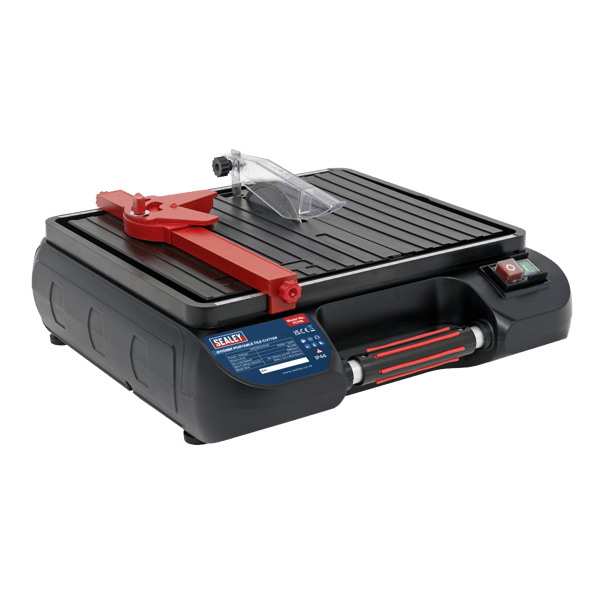 Not yet ratedSealeyPortable Tile Cutter 115mm 500W/230V
- 500W/230V electric motor
- Ø115mm diamond blade
- Table tilts 0–45°, 25mm depth
€141.50€142.93€115.04€116.20 -
 Not yet ratedSealeyReplacement Blade for TC115 Tile Cutter
- Ø115 mm, Ø22.23 mm bore
- Continuous rim diamond edge
- Water-cooled, low vibration
€22.77€23.00€18.51€18.70
Manual tile cutters work by scoring the glaze with a carbide wheel, then snapping the tile along the score line. They're fast for straight cuts on standard ceramic and lighter porcelain, but thicker or harder tiles need more breaking force than the lever can apply cleanly. Check the maximum cut length against your tile size — a 430 mm bed handles most floor tiles, but you'll need to work diagonally or upgrade for large-format slabs.
Powered tile saws use a diamond blade and water to cool the cut and flush dust. A 180 mm blade cuts through dense porcelain and natural stone without chipping, and handles mitres or notches that a scorer can't. Blade choice matters: continuous-rim diamonds suit glazed porcelain, segmented rims clear faster in masonry-backed tiles. Replace the blade when it glazes over or starts wandering — a worn diamond generates heat and chips edges rather than cutting them.
Replacement wheels and blades are consumables. Carbide scoring wheels dull after heavy use, especially on abrasive porcelain. If the score isn't biting cleanly or you're getting ragged snaps, swap the wheel before you waste more tiles. For powered cutters, keep a spare blade on site — diamond segments wear down, and a blade that worked fine on ceramic may struggle once you switch to harder stone.