DPD Delivery Across Ireland | Click & Collect in Cork | Call: (025) 32577 | ⭐⭐⭐⭐⭐ on TrustIndex

Diesel Power Washers

Diesel power washers run where mains power isn't an option—sites without hookup, field work, depot yards. Engine-driven pump means you pick your spot, fill the tank, and work until you need fuel. Models here run stationary diesel engines rated from around 10hp upward, paired with belt or direct-drive pumps delivering enough pressure and flow for heavy cleaning jobs.

— Jump to Filters

Filter & sort

Diesel Power Washers
Default sorting
Price
Brand
0 selectedReset
Weekly Deal
  • Not yet rated
    Triace
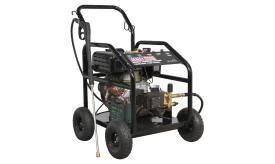
    10hp Yanmar Diesel
    • 10hp Yanmar diesel engine
    • 3000psi @ 15L/min output
    • 10m hose, gun & lance included
    €4,052.85
    €3,295.00

Diesel makes sense when you need consistent output away from a socket. The engine runs at fixed RPM under load, so pump pressure stays steady—useful for stripping yard equipment, washing plant, blasting oil or mud off chassis. Runtime depends on tank size and throttle setting; most units here run several hours between refills. Fuel cost per hour is higher than electric, but you're not hunting for a generator or dragging extension cable.

Check the pump spec first: pressure in bar or PSI, flow in litres per minute. Higher pressure cuts faster through baked-on grime; higher flow clears loose dirt and rinses quicker. Match both to the work—3000 PSI at 15 L/min handles most site cleaning, but if you're mostly rinsing aggregate or washing down lorries, flow matters more than peak pressure. Pumps are usually triplex plunger, brass or stainless head. Ceramic plungers last longer under abrasive use.

Engine choice affects service intervals and parts supply. Yanmar and Loncin are common in this category—parts are stocked locally, manuals are straightforward. Diesel fuel needs to stay clean; fit an inline filter if the onboard one is coarse, and drain the separator regularly. Cold starts improve with a block heater or fresh fuel in winter. If the machine sits unused for weeks, run it dry or dose the tank with stabiliser.

Frame and wheel size matter if you move the washer often. Pneumatic tyres handle rough ground better than solid castors. Hose reel, gun holster, and detergent tank are useful but not standard—check what's included. Most units ship with a trigger gun, lance, and a set of nozzles (0°, 15°, 25°, 40°, soap). Replace nozzles when the orifice wears oval; pressure drops and the fan pattern goes ragged.

Frequently asked questions

When should I choose a diesel power washer over an electric model?
Choose diesel when you need to work away from mains power—field sites, depot yards, or anywhere without a socket. The engine-driven pump lets you work independently until you need to refuel, and pressure stays steady under load because the diesel runs at fixed RPM.
What pressure and flow rate do I need for heavy site cleaning?
Around 3000 PSI at 15 litres per minute handles most heavy cleaning jobs like stripping yard equipment or blasting mud off chassis. Higher pressure cuts through baked-on grime faster; higher flow clears loose dirt and rinses quicker, so match both figures to the type of work you do most.
How long will a diesel pressure washer run between refills?
Runtime depends on tank size and throttle setting. Most diesel power washers run several hours between refills, though fuel cost per hour is higher than electric—you trade running cost for the ability to work without a generator or extension cable.
What maintenance does a diesel power washer need?
Keep diesel fuel clean by fitting an inline filter if the onboard one is coarse, and drain the water separator regularly. If the machine sits unused for weeks, run it dry or add fuel stabiliser. Cold starts improve with fresh fuel in winter or a block heater.
Why do triplex plunger pumps appear on most diesel power washers?
Triplex plunger pumps with brass or stainless heads deliver consistent pressure and handle commercial use. Ceramic plungers last longer under abrasive conditions, which matters when you're cleaning plant or washing down equipment regularly.
What should I check before buying an industrial power washer for site work?
Check the pump spec first—pressure in bar or PSI and flow in litres per minute—then look at engine make for parts supply and service intervals. Frame build and wheel type matter if you move the washer often; pneumatic tyres handle rough ground better than solid castors.