DPD Delivery Across Ireland | Click & Collect in Cork | Call: (025) 32577 | ⭐⭐⭐⭐⭐ on TrustIndex

Hot Power Washers

Hot power washers heat the water supply to strip grease, oil, and organic matter faster than cold-water machines. Used in workshops, food prep areas, and livestock yards where detergent alone won't shift the residue. Choose between diesel or electric burner types depending on site power and whether you need the unit mobile or static.

— Jump to Filters

Filter & sort

Hot Power Washers
Default sorting
Price
Brand
0 selectedReset
Weekly Deal
New

Showing all 3 results

  • Mini Hot
    Not yet rated
    Triace
    Mini Hot
    • 2000 psi @ 11 L/min
    • 10 m delivery hose, gun & lance
    €3,226.91 €3,259.50
    €2,623.50 €2,650.00
  • Not yet rated
    Triace
    Speedclean Hot & Cold Electric Pressure Washer
    • Up to 3000 PSI, hot/cold
    • 10 m hose, 900 mm lance
    • Diesel/kerosene burner
    €3,713.99
    €3,019.50
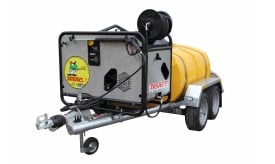
  • Twin Axle Yanmar Hot Cube
    Not yet rated
    Triace
    Twin Axle Yanmar Hot Cube
    • 1000 l integrated water tank
    • Up to 90 minutes runtime
    • Twin axle trailer with brakes
    €23,745.15 €23,985.00
    €19,305.00 €19,500.00

A hot washer's burner adds significant weight and bulk compared to a cold unit, so check access and floor load if you're working indoors. Diesel burners need venting and regular nozzle cleaning; electric burners draw high current and may need three-phase supply on larger models. Run time matters — continuous-duty pumps and ceramic-lined combustion chambers handle all-day use, while lighter builds suit occasional work.

Bar pressure and flow rate set what you can clean. Higher bar cuts through carbonised deposits; higher litres per minute covers area faster. Match the lance and nozzle to the job — rotary nozzles for concrete, flat fans for panels, variable patterns for mixed tasks. Hose length determines reach without moving the machine; 10–15 metres covers most yard work, longer runs lose pressure unless you step up hose diameter.

Thermostat control keeps output temperature steady, usually 60–90°C for general degreasing, higher for baked-on carbon. Check what temperature the pump seals tolerate if you plan to run at the top end. Service access to the burner, pump, and unloader valve speeds maintenance — awkward layouts cost time every oil change and seal replacement.

Frequently asked questions

What is a hot water pressure washer used for?
A hot water pressure washer heats the water supply to strip grease, oil, and organic matter faster than cold-water machines. They are used in workshops, food prep areas, and livestock yards where detergent alone won't shift residue.
Should I choose a diesel or electric hot pressure washer?
Diesel burners suit mobile outdoor work and don't need mains power, but they require venting and regular nozzle cleaning. Electric burners draw high current and may need three-phase supply on larger models, making them better for static indoor installations with reliable power.
What temperature does a hot power washer reach?
Thermostat control typically keeps output temperature steady between 60–90°C for general degreasing, with higher settings available for baked-on carbon. Check what temperature your pump seals tolerate if you plan to run at the top end.
What bar pressure and flow rate do I need for a hot washer?
Higher bar pressure cuts through carbonised deposits, while higher litres per minute covers area faster. Match the specification to your job—the pressure strips tough residue, the flow rate determines how quickly you cover ground.
Can I use a hot pressure washer indoors?
You can, but diesel burners need proper venting and hot washers add significant weight and bulk compared to cold units, so check access and floor load before bringing one inside. Electric burners are quieter and produce no exhaust, making them better suited to enclosed workshops.
How long can a hot power washer run continuously?
Continuous-duty pumps and ceramic-lined combustion chambers handle all-day use, while lighter builds suit occasional work. Run time matters if you're cleaning large areas or operating commercially—check the duty cycle before committing to a model.