
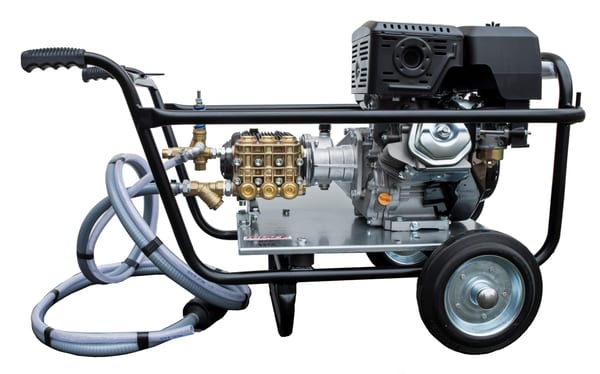
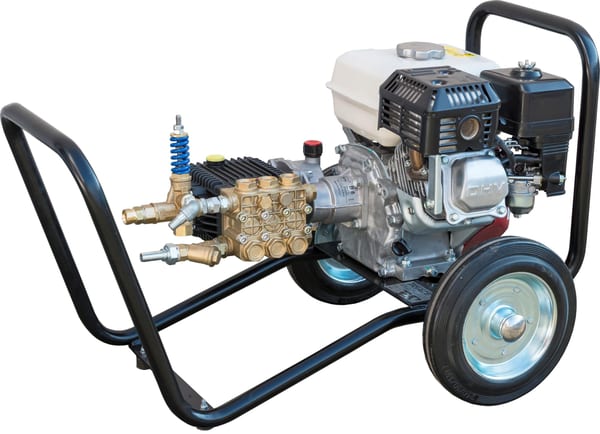
Hi. What are you looking for? Tell us what you need and we'll get back to you.
Petrol Power Washers
Petrol power washers run independent of mains supply — useful on farms, building sites, or anywhere you're working beyond extension-lead range. They deliver higher pressure and flow than most electric models, shifting heavy soil, stripping paint, and cleaning large plant fast. Pick output by the job: 2000–3000 PSI for general yard work and vehicles, 3500+ PSI for concrete, block paving, or industrial kit.
Showing all 7 results
-
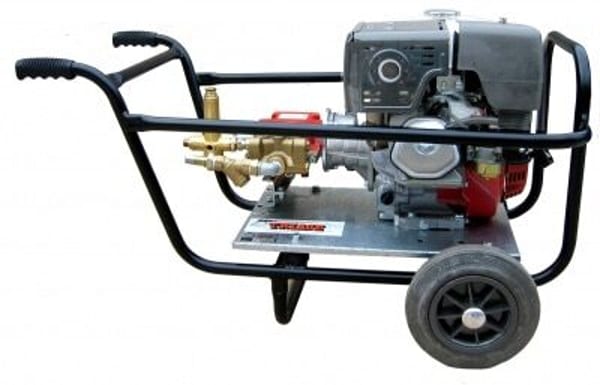 Not yet ratedTriace13hp 4000PSI Petrol Pressure Washer Powered by HONDA with Electric Start
- 4000 PSI / 275 bar @ 15 L/min
- 3-piston pump, 1450 rpm
- 10 m high-pressure hose
€3,181.25€3,213.38€2,586.38€2,612.50 -
Not yet ratedTriace13hp Power Washer
- 13 hp Honda GX390 engine
- 10 m high-pressure hose
- 1200 mm lance, spray nozzle
€2,453.85€1,995.00 -
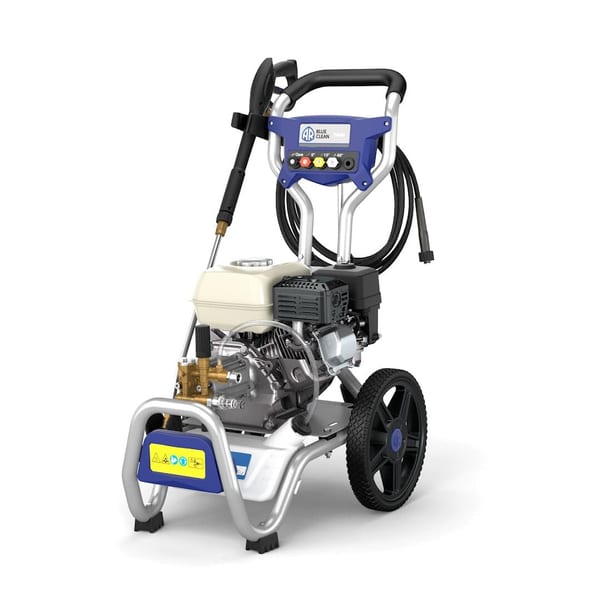 Not yet ratedAnnovi ReverberiAR Blue Clean 1440 Petrol Pressure Washer
- Honda petrol engine, 3400 rpm
- 200 bar max pressure (~2900 PSI)
- 660 l/h max flow rate (~11 LPM)
€1,019.21€1,029.51€828.63€837.00 -
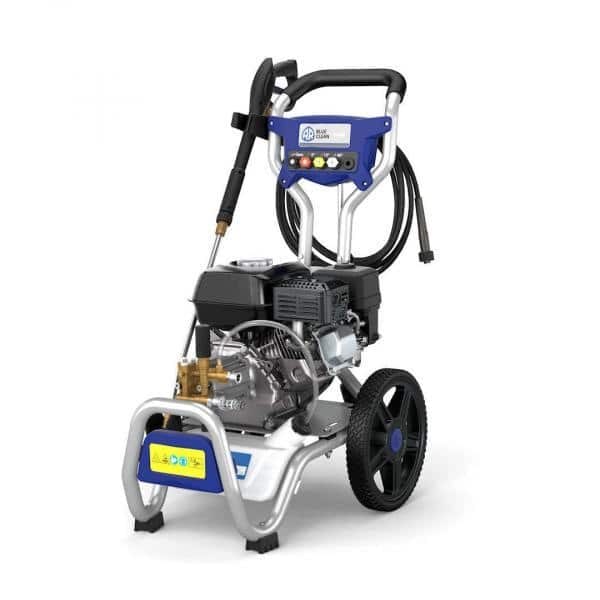
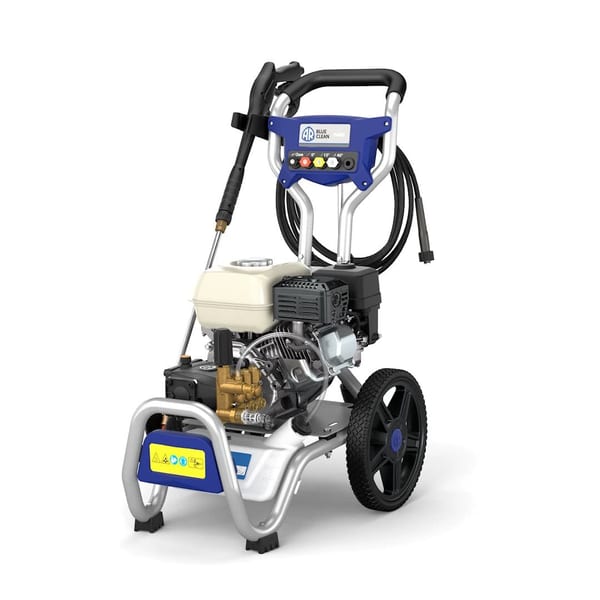 Not yet ratedAnnovi ReverberiAR Blue Clean 1450 Petrol Pressure Washer
- 220 bar max pressure (~3200 PSI)
- Honda petrol engine, 3400 rpm
- 720 l/h flow rate (~12 LPM)
€1,144.64€1,156.20€930.60€940.00 -
-
Not yet ratedTriaceHonda GX200 6.5hp Power Washer
- Honda GX200 engine, 6.5 hp
- 2200 PSI pressure output
- 10 m high-pressure hose
€1,316.10€1,070.00 -
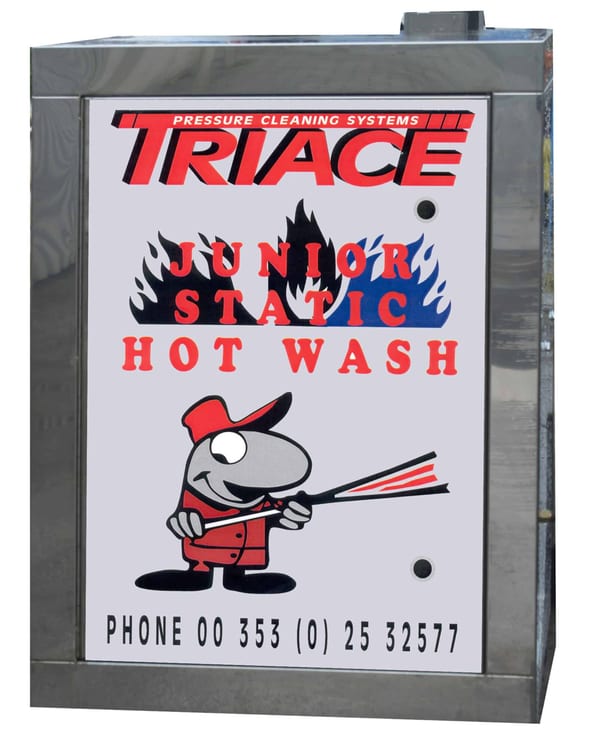 Not yet ratedTriaceJunior Cabinet
- Pump/motor: 1500–5000 psi
- Flow rate: 11–30 L/min
- Optional heat exchanger
€7,304.98€7,378.77€5,939.01€5,999.00
Engine choice matters. Honda GX units are common for a reason — they start reliably, hold speed under load, and parts are straightforward if something wears. Electric start removes the pull-cord hassle on larger engines; worth it if you're running the machine daily. Check the pump type: axial is lighter and cheaper, triplex plunger lasts longer under continuous use and handles grit better.
Match pressure and flow to the surface. High PSI alone won't clean faster if flow is low — you need both. A 13 hp unit pushing 4000 PSI will strip mortar pointing if you're not careful; dial back the nozzle or stand further off delicate block. Conversely, trying to clean a silage pit with a 6.5 hp washer means you'll be there all day. For general farm and trade work, something mid-range around 3000 PSI with 10–12 litres per minute covers most bases.
Hose length and reel setup affect how much you're dragging the machine around. Longer hose means fewer repositions, but pressure drops slightly over distance. If the washer doesn't come with a reel, budget for one — coiling 10 metres of stiff hose by hand every time gets old fast. Check inlet filter access too; silt and grit will wreck a pump if they get through, and farm water supplies aren't always clean.
Frequently asked questions
What makes a petrol power washer different from an electric model?
A petrol power washer runs independent of mains supply, so you can use it on farms, building sites, or anywhere beyond extension-lead range. Petrol units typically deliver higher pressure and flow than electric models, making them better suited to shifting heavy soil, stripping paint, and cleaning large plant or concrete quickly.
What PSI should I look for in a petrol pressure washer?
Choose 2000–3000 PSI for general yard work and vehicles. For concrete, block paving, or industrial equipment, look at 3500 PSI or higher. High PSI alone won't clean faster if flow is low—you need both pressure and litres per minute matched to the job.
Why do most petrol power washers use Honda engines?
Honda GX units start reliably, hold speed under load, and parts are straightforward if something wears. Electric start versions remove the pull-cord hassle on larger engines, which is worth it if you're running the machine daily.
What's the difference between axial and triplex plunger pumps on a petrol power washer?
Axial pumps are lighter and cheaper. Triplex plunger pumps last longer under continuous use and handle grit better, making them the better choice for farm or trade work where the machine runs all day or draws from less-clean water supplies.
Can a 13 hp petrol pressure washer damage surfaces?
Yes. A 13 hp unit pushing 4000 PSI will strip mortar pointing or damage delicate block if you're not careful. Dial back the nozzle or stand further off sensitive surfaces. For general farm and trade work, a mid-range unit around 3000 PSI with 10–12 litres per minute covers most bases without the same risk.
Does hose length affect pressure on a petrol power washer?
Longer hose means fewer repositions, but pressure drops slightly over distance. If the washer doesn't come with a reel, budget for one—coiling 10 metres of stiff hose by hand every time gets old fast.
Why does inlet filter access matter on a petrol power washer?
Silt and grit will wreck a pump if they get through, and farm water supplies aren't always clean. Easy filter access means you can check and clear debris regularly, which is essential for longevity under continuous use.