
Hi. What are you looking for? Tell us what you need and we'll get back to you.
Polishers
Bench-mounted polishers handle finishing work on metal, plastics, and composite materials where a hand tool won't hold a steady enough line. These machines clamp to the workbench and spin buffing wheels or mops at fixed speed, leaving both hands free to control the workpiece. Common jobs: polishing welds, removing oxidation, bringing machined aluminium or stainless up to a mirror finish, de-burring turned components. Motor size and wheel diameter set how much material you can work and how fast the job goes.
Showing all 2 results
-
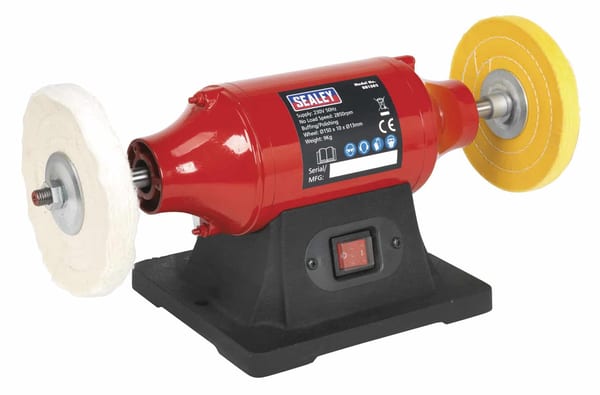 Not yet ratedSealey150mm Bench Mounting Buffer/Polisher 370W/230V
- 370W motor, 2850 rpm
€159.76€161.38€129.89€131.20 -
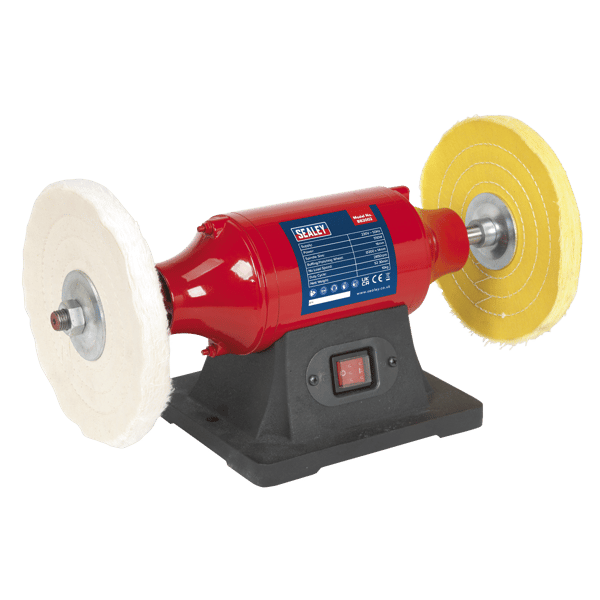 Not yet ratedSealey200mm Bench Mounting Buffer Polisher 550W/230V
- 550W motor, 230V
- Cast iron base, 2850rpm
€182.59€184.44€148.45€149.95
Pick motor wattage and wheel diameter to match the work. A 150 mm wheel on a 370 W motor suits light polishing—small brackets, turned parts, jewellery components. Step up to 200 mm and 550 W if you're finishing larger fabrications or working harder alloys where you need sustained torque without the motor bogging down. Bigger wheels hold more mop material and cover flatter surfaces faster; smaller ones get into tighter profiles.
Most bench polishers run single-speed. Match your buffing compound and mop type to the surface finish you're after: coarse sisal for cutting back heavy oxidation, stitched cotton for intermediate work, loose-section calico or felt for final mirror polish. The mop does as much as the machine—worn or loaded mops just burn the work.
Mount the polisher so swarf and compound spray away from you, not across the bench. Check arbor thread size before buying mops; metric and imperial threads both turn up. If you're polishing anything ferrous, keep a separate set of mops—embedded steel dust will scratch stainless and aluminium. Clean the wheels between jobs or you'll drag old compound into the next finish.