
Hi. What are you looking for? Tell us what you need and we'll get back to you.
Bottle Jacks
Bottle jacks lift vehicles, machinery, and structural loads using a vertical hydraulic ram. The compact footprint fits under low-clearance sills and chassis rails where trolley jacks won't reach. Capacities here run from 2 to 50 tonnes, matched to the load you're shifting — under-spec and the ram won't extend fully; over-spec and you're carrying needless weight.
Showing all 29 results
-
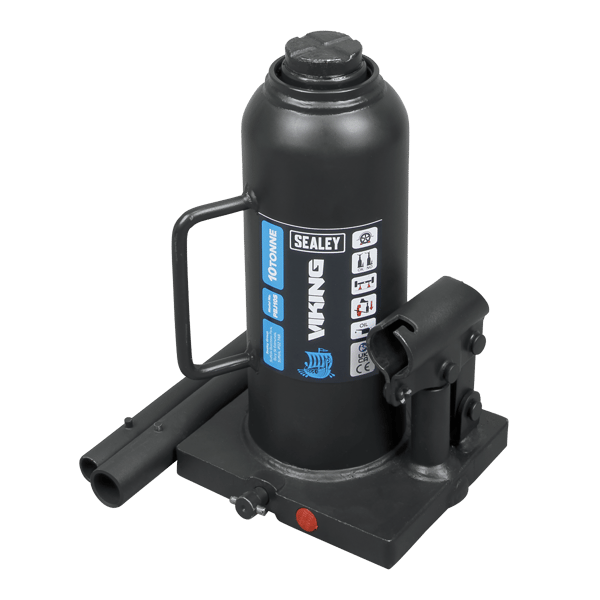
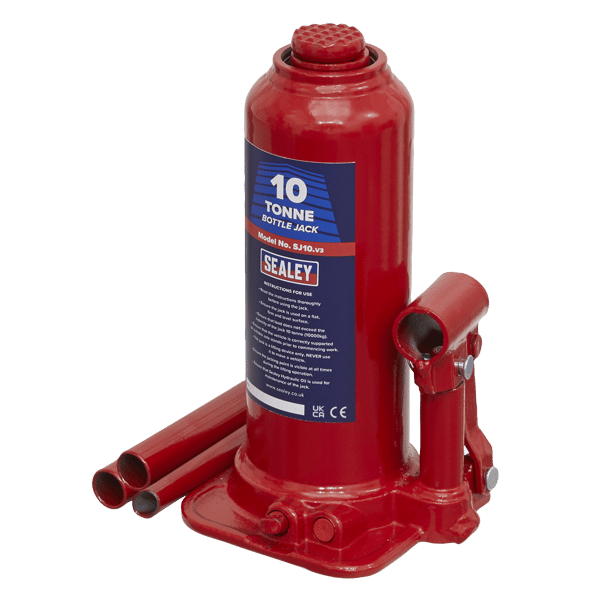 Not yet ratedSealeyBottle Jack 10 Tonne
- 10 tonne capacity
- Overload valve, 2-piece handle
€102.95€83.70 -
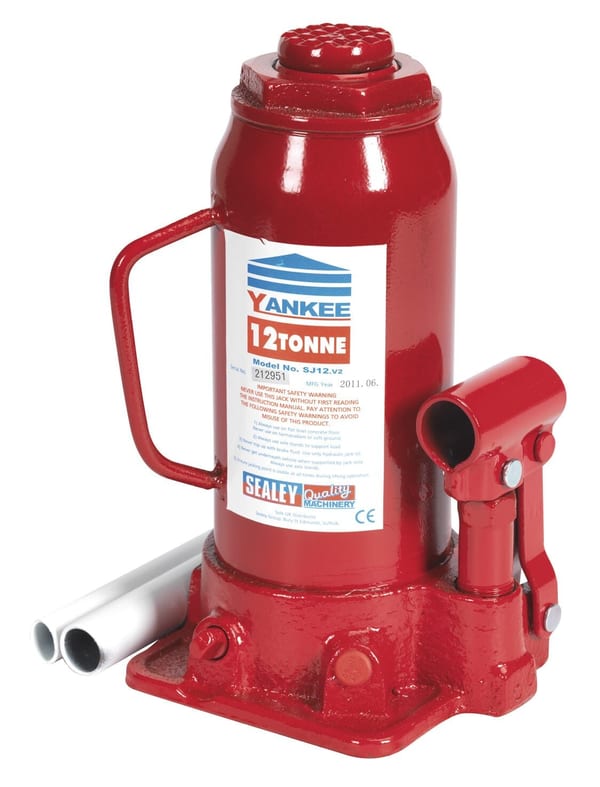 Not yet ratedSealeyBottle Jack 12 Tonne
- 12 tonne capacity
- 150 mm hydraulic lift
- Overload valve fitted
€112.58€113.71€91.53€92.45 -
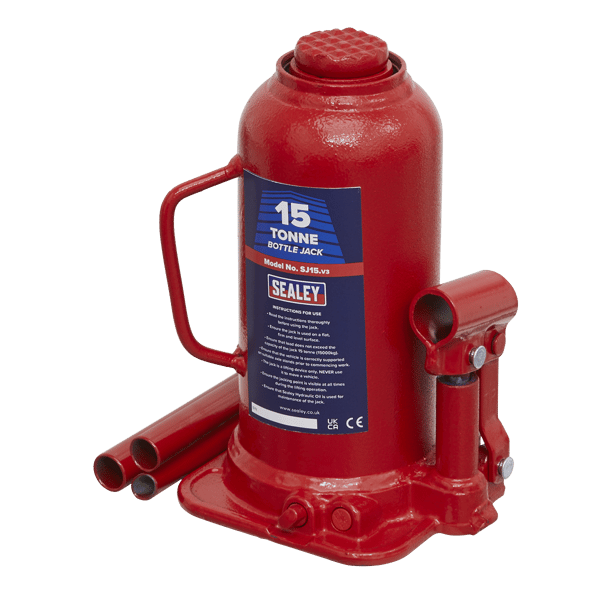 Not yet ratedSealeyBottle Jack 15 Tonne
- 15 tonne capacity
- Machine welded base + reservoir
- Overload valve fitted
€133.89€135.24€108.85€109.95 -
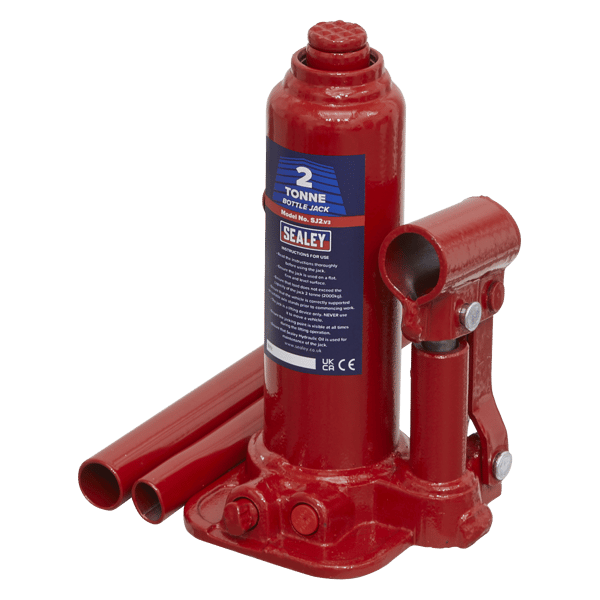 Not yet ratedSealeyBottle Jack 2 Tonne
- 2 tonne capacity
- 100 mm hydraulic lift
- Overload valve fitted
€50.17€50.68€40.79€41.20 -
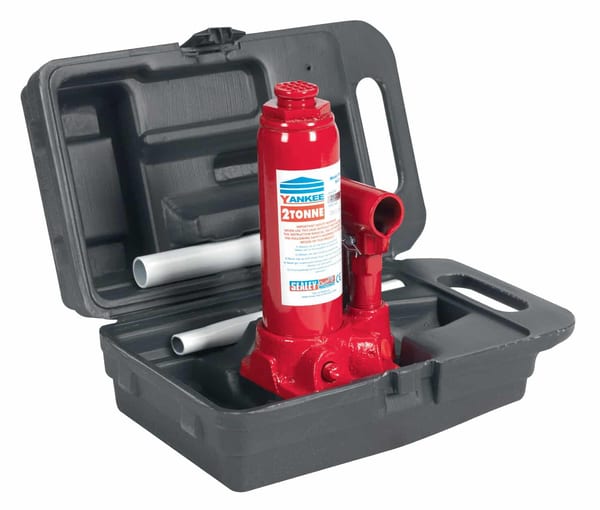 Not yet ratedSealeyBottle Jack 2 Tonne with Storage Case
- 2 tonne capacity
- 100 mm hydraulic lift
- Overload valve fitted
€56.83€46.20 -
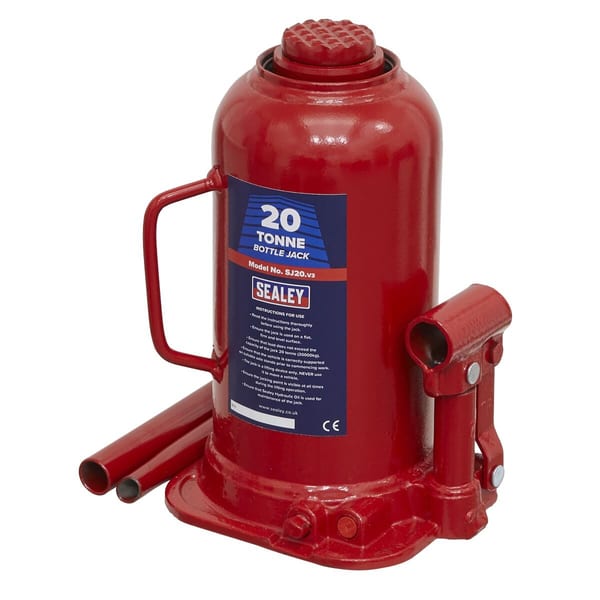 Not yet ratedSealeyBottle Jack 20 Tonne
- 20 tonne capacity
- 150 mm hydraulic lift
- Machine-welded base + reservoir
€158.30€128.70 -
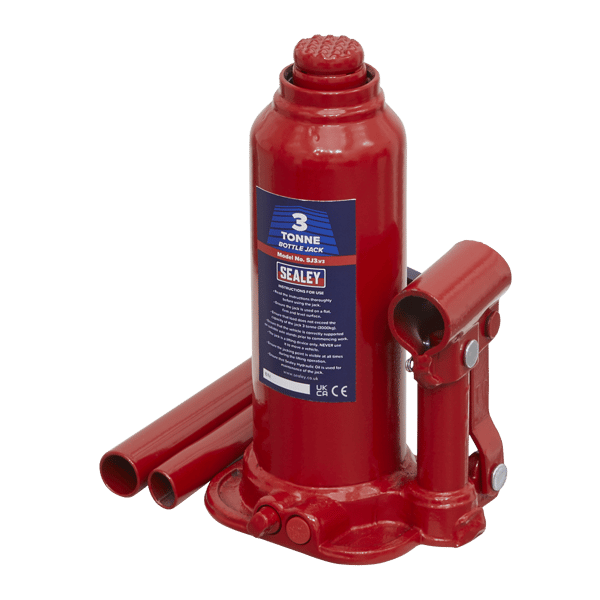 Not yet ratedSealeyBottle Jack 3 Tonne
- 3 tonne capacity
- Hydraulic lift 115 mm
- Machine welded base + reservoir
€57.79€58.36€46.98€47.45 -
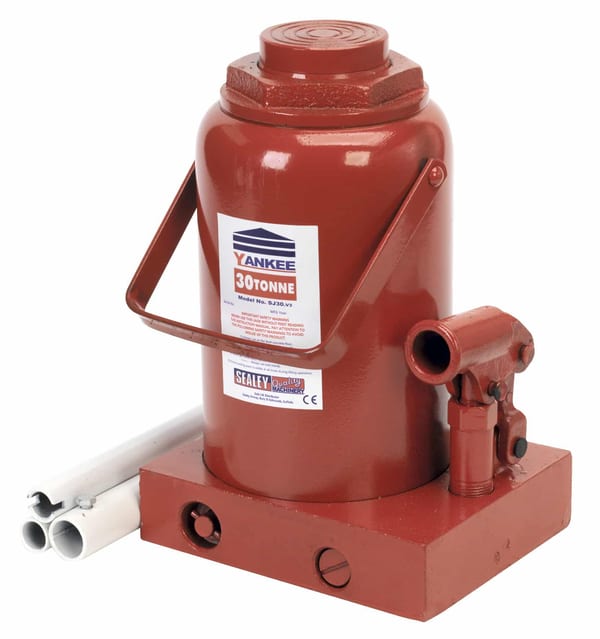 Not yet ratedSealeyBottle Jack 30 Tonne
- 30 tonne capacity
- Lifts 160 mm, max height 420 mm
- Carrying handle, 3-piece handle
€281.53€284.38€228.89€231.20 -
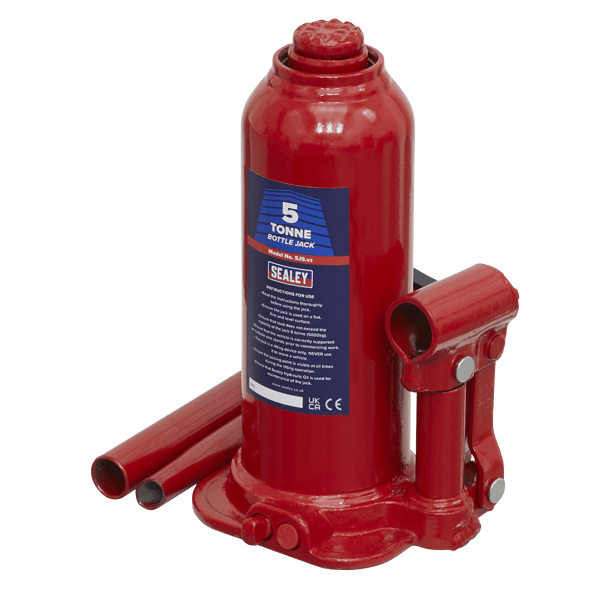 Not yet ratedSealeyBottle Jack 5 Tonne
- 5 tonne capacity
- 125 mm hydraulic lift
- Machine-welded base + reservoir
€67.59€54.95 -
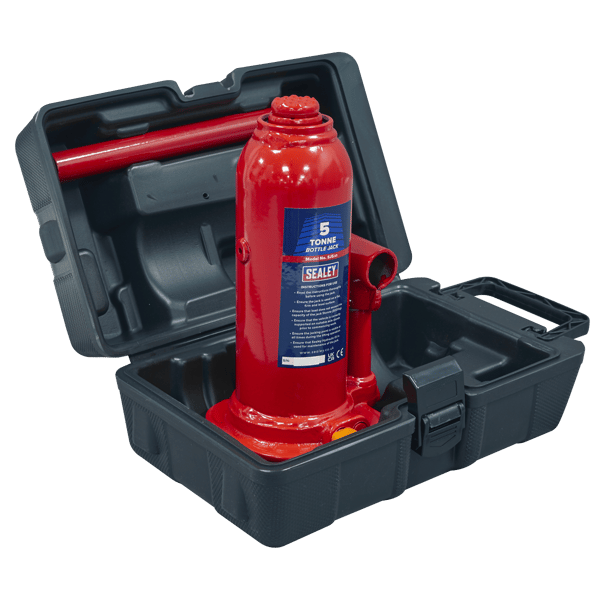 Not yet ratedSealeyBottle Jack 5 Tonne with Storage Case
- 5 Tonne capacity
- 125 mm hydraulic lift
- Overload valve fitted
€76.81€62.45 -
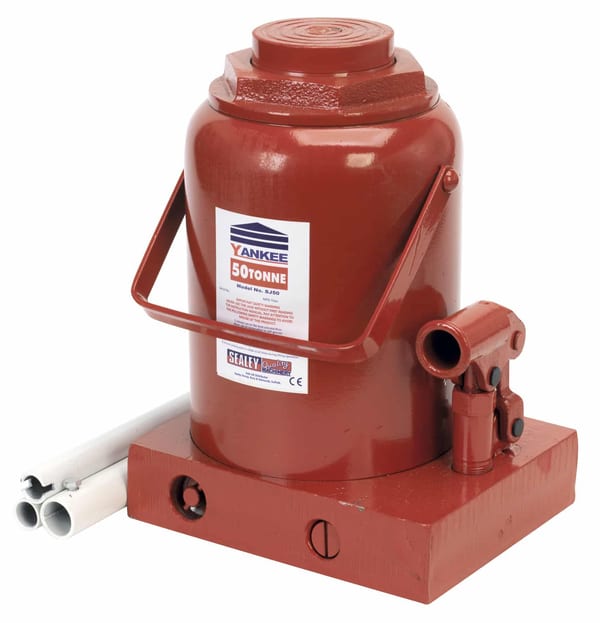 Not yet ratedSealeyBottle Jack 50 Tonne
- 50 tonne capacity
- 170 mm hydraulic lift
- Machine-welded base + reservoir
€381.24€309.95 -
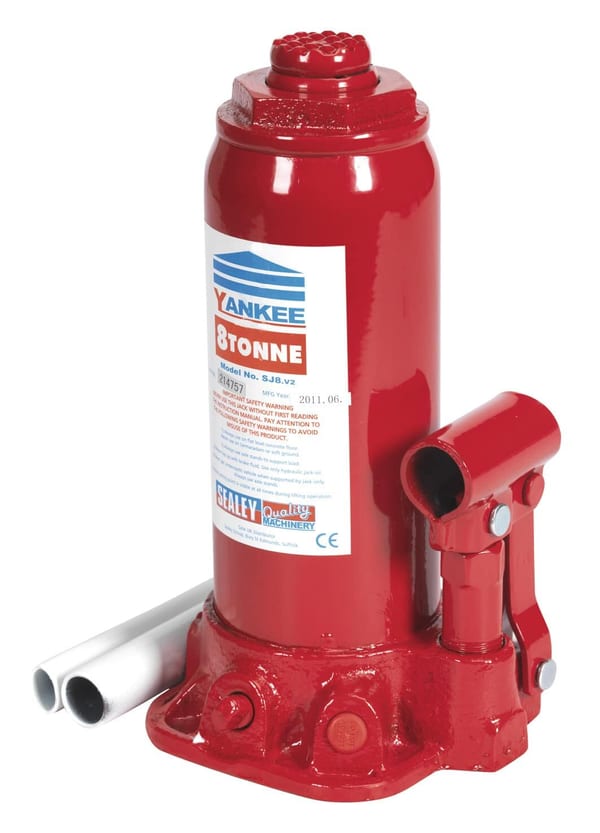 Not yet ratedSealeyBottle Jack 8 Tonne
- 8 tonne capacity
- Lift height: 145 mm
- Machine welded base + reservoir
€86.70€87.58€70.49€71.20 -
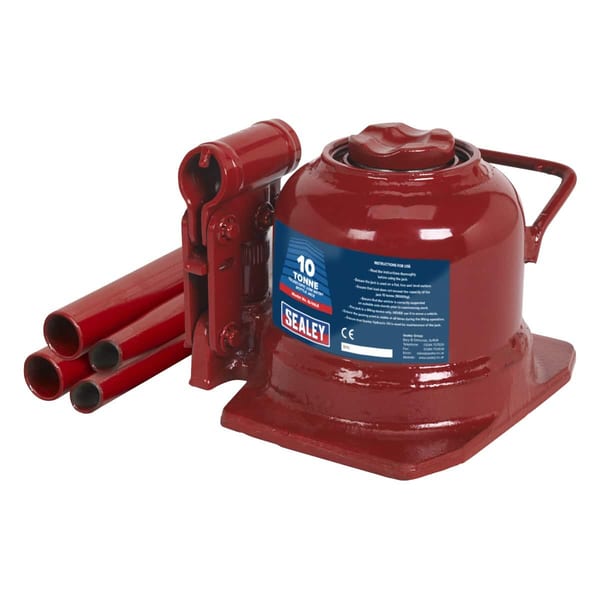 Not yet ratedSealeyLow Profile Telescopic Bottle Jack 10 Tonne
- 10 tonne capacity
- Min 125 mm, max 215 mm height
- Telescopic two-stage ram
€215.19€174.95 -
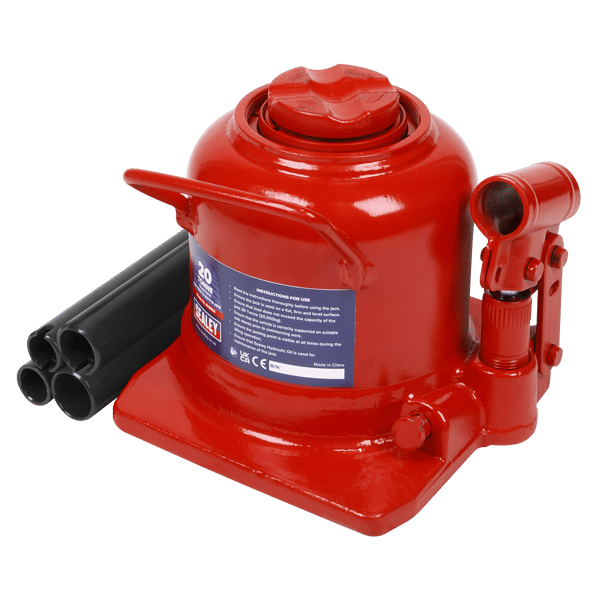 Not yet ratedSealeyLow Profile Telescopic Bottle Jack 20 Tonne
- 20 tonne capacity
- 155–250 mm lift range
- Overload safety valve
€251.09€253.63€204.14€206.20 -
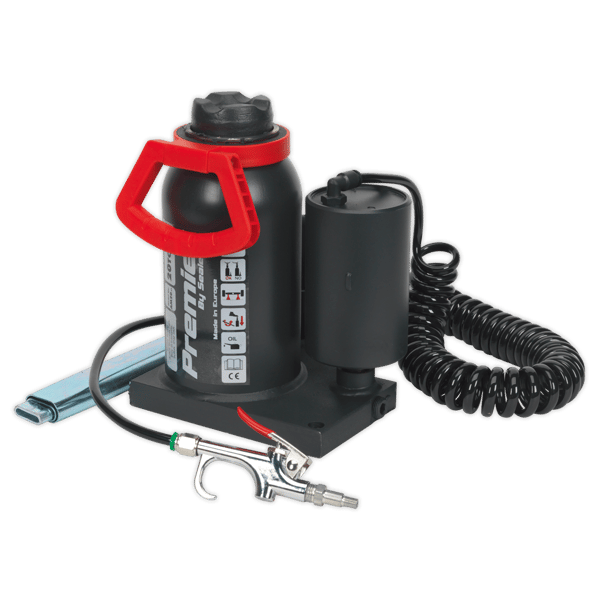 Not yet ratedPremierManual/Air Hydraulic Bottle Jack 20 Tonne
- 20 tonne capacity
- Air/manual hydraulic operation
- Safety overload valve
€1,095.87€1,106.94€890.95€899.95 -
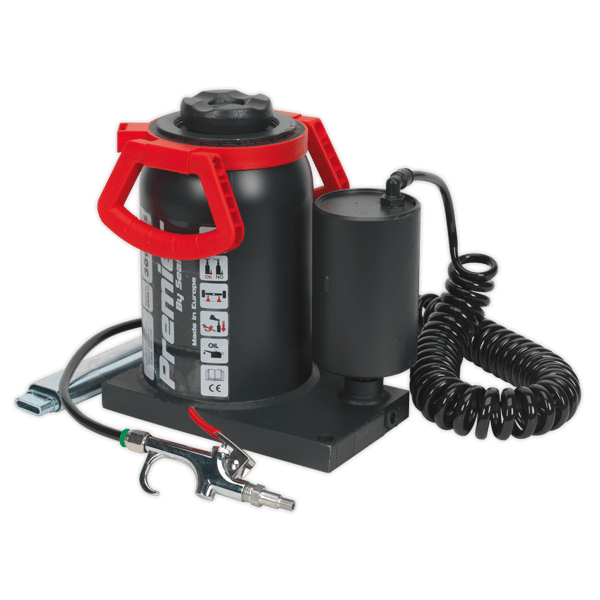 Not yet ratedPremierManual/Air Hydraulic Bottle Jack 30 Tonne
- 30 tonne capacity
- Air/manual operation modes
- Safety overload valve
€1,352.94€1,099.95 -
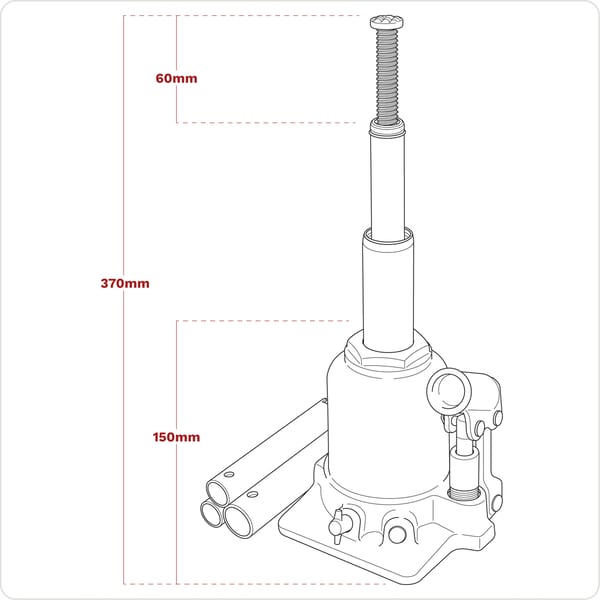 Not yet ratedSealeyTelescopic Bottle Jack 2 Tonne
- 2 tonne capacity
- Dual-stage rams, longer travel
- Lift height 160 mm
€94.32€95.26€76.68€77.45 -
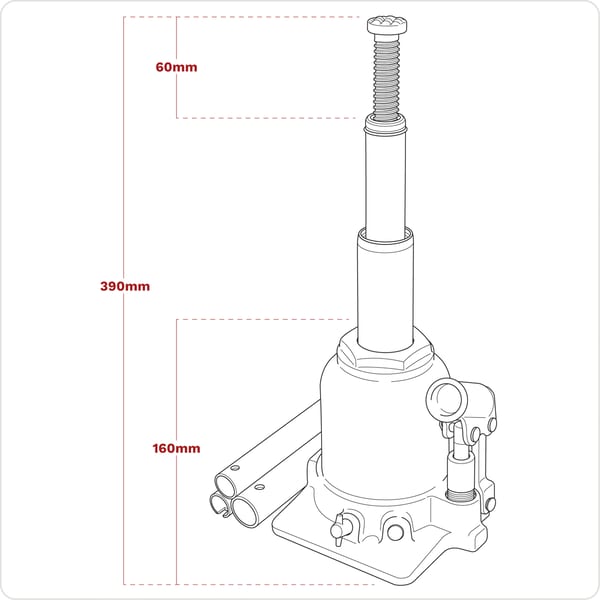 Not yet ratedSealeyTelescopic Bottle Jack 4 Tonne
- 4 tonne capacity
- Dual-stage rams, longer travel
- Lift height 170 mm
€126.27€127.55€102.66€103.70 -
-
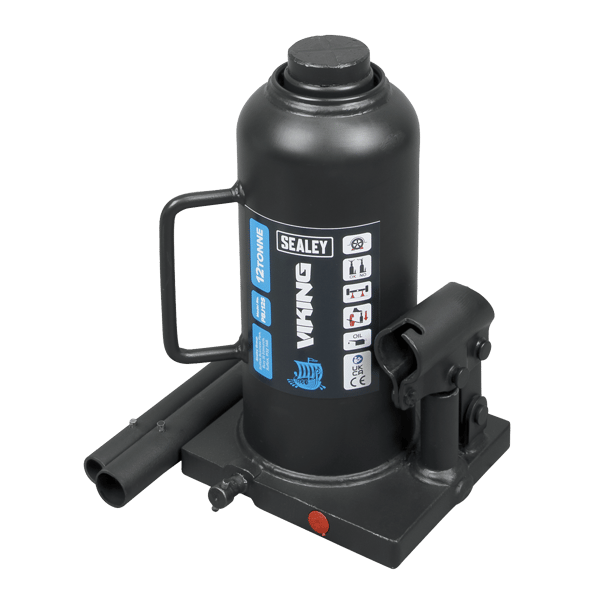 Not yet ratedSealeyViking Bottle Jack 12 Tonne
- 12 tonne capacity
- Hydraulic lift 150 mm
- Overload valve fitted
€129.32€130.63€105.14€106.20 -
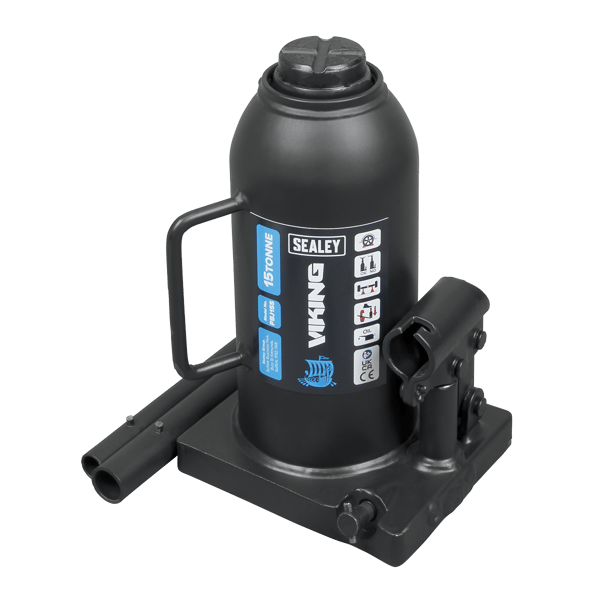 Not yet ratedSealeyViking Bottle Jack 15 Tonne
- 15 tonne capacity
- Overload valve fitted
- Machine welded base, leak-free
€144.54€146.00€117.51€118.70 -
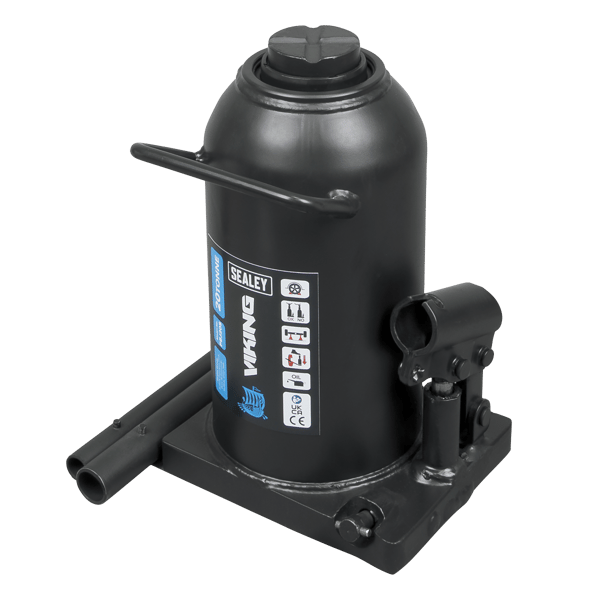
-
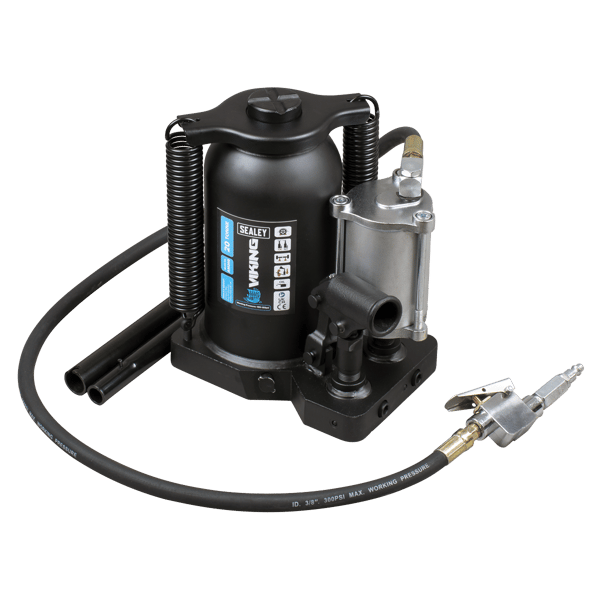 Not yet ratedSealeyViking Manual/Air Hydraulic Bottle Jack 20 Tonne€563.13
€568.81€457.83€462.45 -
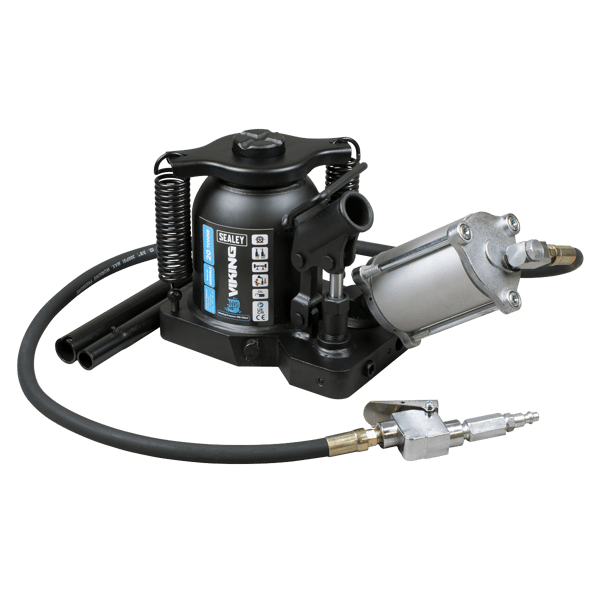 Not yet ratedSealeyViking Manual/Air Hydraulic Bottle Jack 20 Tonne
- 20 tonne capacity
- Air/hydraulic dual operation
- Safety overload valve
€517.46€522.69€420.70€424.95 -
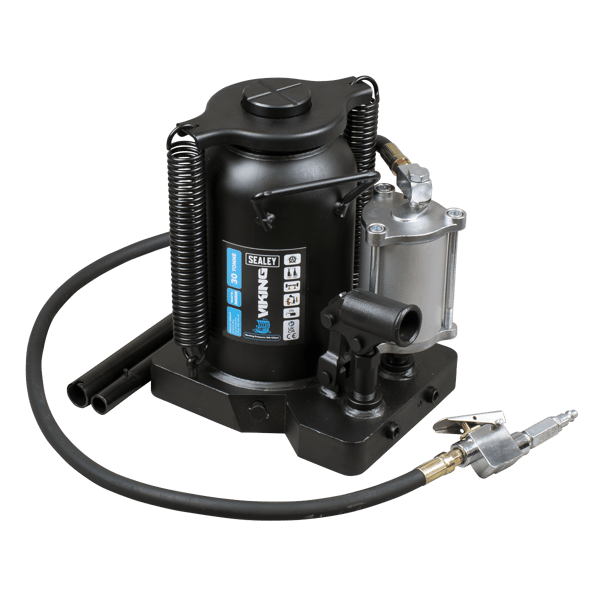 Not yet ratedSealeyViking Manual/Air Hydraulic Bottle Jack 30 Tonne
- 30 tonne capacity
- Safety overload valve
- 90° rotating pump head
€730.56€737.94€593.95€599.95 -
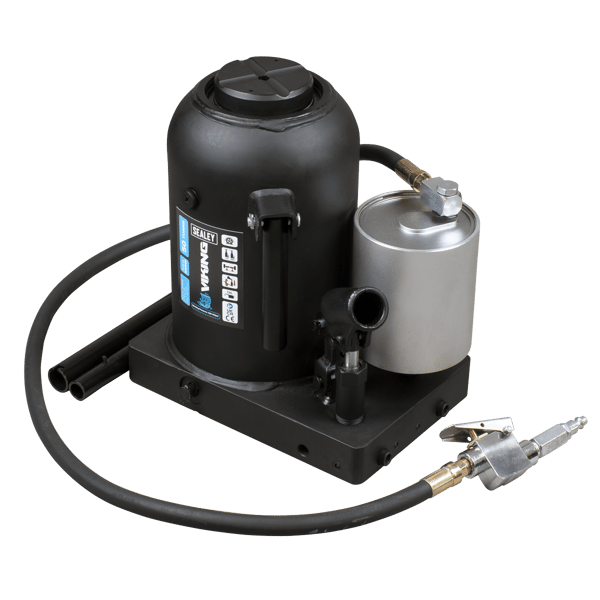 Not yet ratedSealeyViking Manual/Air Hydraulic Bottle Jack 50 Tonne
- 50 tonne capacity
- Air/hydraulic dual operation
- Safety overload valve
€882.77€891.69€717.70€724.95 -
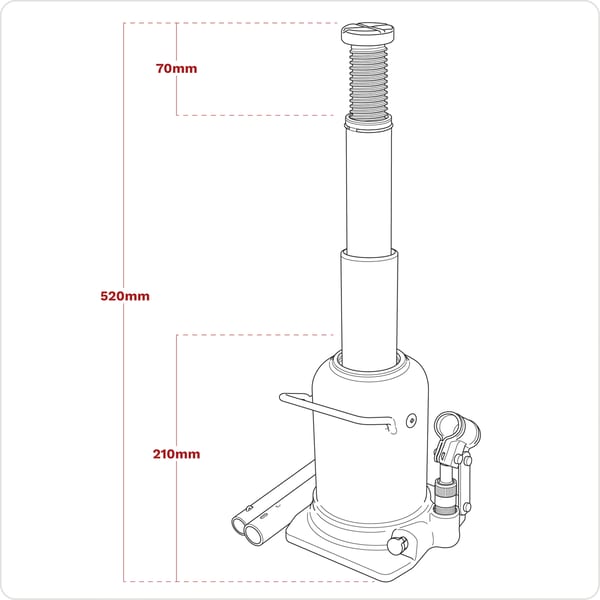 Not yet ratedSealeyViking Telescopic Bottle Jack 10 Tonne
- 10 tonne capacity
- Safety overload valve
- Machine-welded base + reservoir
€228.26€230.56€185.58€187.45 -
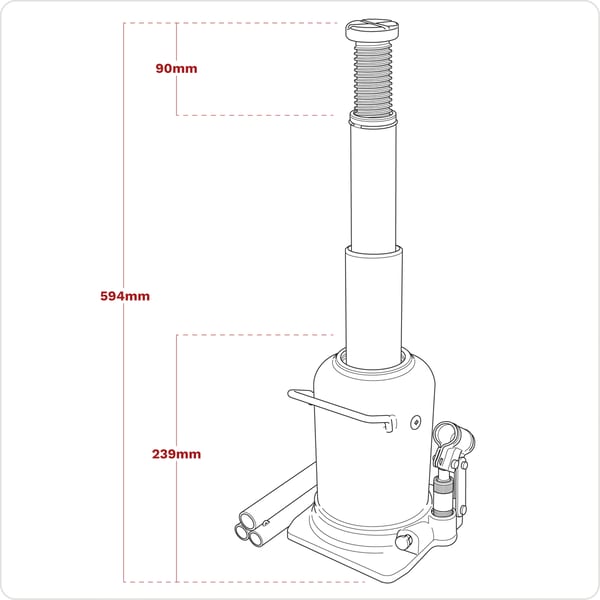 Not yet ratedSealeyViking Telescopic Bottle Jack 12 Tonne
- 12 tonne capacity
- Telescopic rams, 265 mm lift
- Min. 239 mm / max. 594 mm height
€258.71€261.31€210.33€212.45 -
Picking the Right Capacity
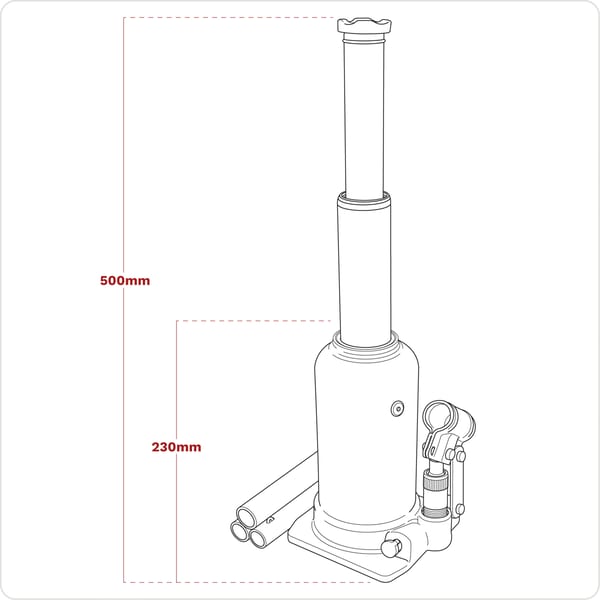
Tonnage is the first spec, but it's not the only one that matters. Check the minimum lifting height — the collapsed height of the saddle — against the clearance under your vehicle or frame. A 12-tonne jack is useless if it's too tall to slide beneath a lowered sill. Maximum lift height tells you how far the ram will extend; if you need more travel, stack solid packing under the jack base, never under the saddle.
The saddle diameter and shape affect contact with the load. Flat saddles suit flat jacking points; some models include a removable screw extension for uneven surfaces or pinch welds. On any jack, centre the load over the ram axis — side-loading bends the piston and blows seals. Use axle stands or cribbing as soon as the load is up; a hydraulic ram holds pressure, but it's not a static support. Seals weep, valves stick, and a dropped load crushes whatever's underneath.
The Sealey range includes 2 to 50 tonne models, some supplied with a storage case to keep dust and grit out of the piston bore between jobs. Smaller jacks — 2, 3, 5 tonne — are light enough to carry in a van or tractor toolkit. Larger units, 12 tonnes and above, are workshop or site tools: heavier, more stable, built for repeated use under plant and heavy commercial vehicles. Match the jack to the lightest regular load you'll lift, not the heaviest thing you might encounter once a year.