
Hi. What are you looking for? Tell us what you need and we'll get back to you.
Drill Mixers
Drill mixers handle bulk mixing of plaster, mortar, grout, screed, and paint — jobs where a hand drill hasn't the torque or a cement mixer's overkill. Built around high-torque electric motors and long paddles, they're made for site work where you need consistent batches without stopping to cool down. Choose capacity and motor wattage to match the volume and density of what you're mixing.
Showing all 3 results
-
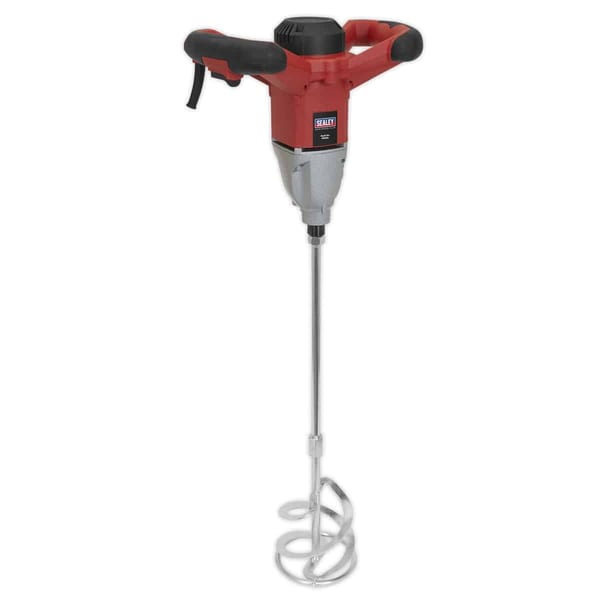 Not yet ratedSealey120L Electric Paddle Mixer 1400W
- 120L mixing capacity
- 1400W motor, 0–800 rpm
- 6-speed + soft start
€174.98€176.75€142.26€143.70 -
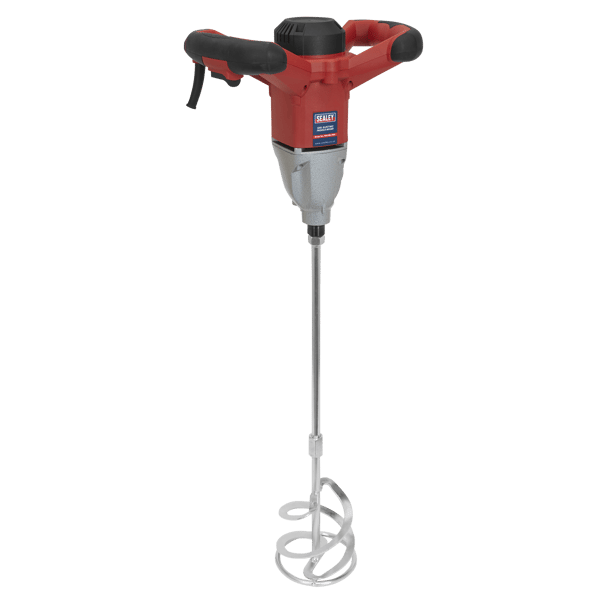 Not yet ratedSealey120L Electric Paddle Mixer 1400W/110V
- 120L mixing capacity
- 1400W, 110V motor
- 6-speed + soft start
€182.59€184.44€148.45€149.95 -
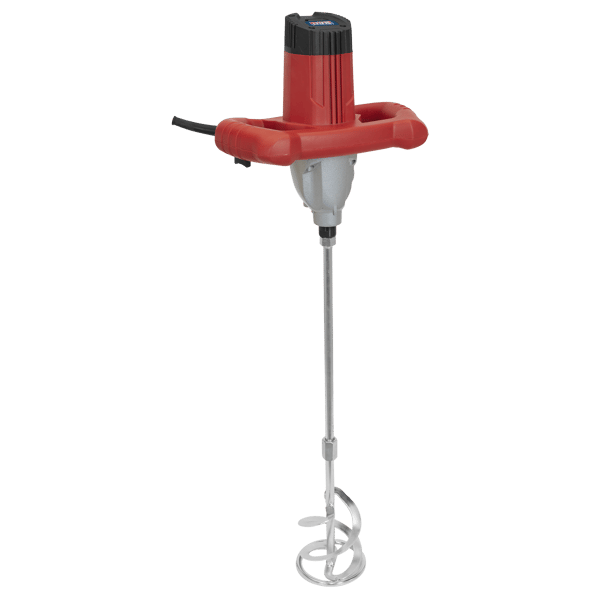 Not yet ratedSealey80L Electric Paddle Mixer 1220W/230V
- 80L mixing capacity
- 1220W, 230V motor
- 2-speed, soft start
€144.54€146.00€117.51€118.70
Wattage and drum capacity go hand in hand. An 80-litre mixer with a 1220W motor suits lighter compounds — tile adhesive, filler, emulsion — where you're working fast and the mix isn't heavy. Step up to 120 litres and 1400W for denser loads: render, screed, or thick mortar that would stall a smaller unit. The paddle does the work, but only if the motor has enough reserve to keep speed steady under load.
Paddle design matters as much as power. Spiral or helix paddles pull material upward, keeping it moving through the drum without dead zones at the bottom. Flat paddles are cheaper but need more passes to get an even mix. Check the shaft length against your typical drum height — you want the paddle working near the base, not just skimming the top third. Some models take interchangeable paddles; handy if you switch between thin and thick mixes regularly.
Voltage depends on where you're working. A 230V model runs off standard mains; fine for indoor refurbs or sites with mains hookup. The 110V version plugs into a site transformer, which most contractors already have for tools on larger builds. If you're running off a genny or working outdoors, 110V avoids nuisance trips and keeps you compliant. Both voltages deliver the same mixing performance; it's purely a question of supply.