
Hi. What are you looking for? Tell us what you need and we'll get back to you.
Steam Cleaners
Steam cleaners use superheated vapour to loosen grime, kill bacteria, and lift contaminants without chemicals — useful when detergent residue is a problem or you're cleaning food-prep surfaces. Most run at 3–4 bar pressure with continuous refill tanks or detachable boilers; the 2kW Sealey units heat tap water to 130–150°C in under ten minutes. Common jobs include degreasing workshop floors, sanitising vehicle interiors, and stripping adhesive from glass or tile.
Showing the single result
-
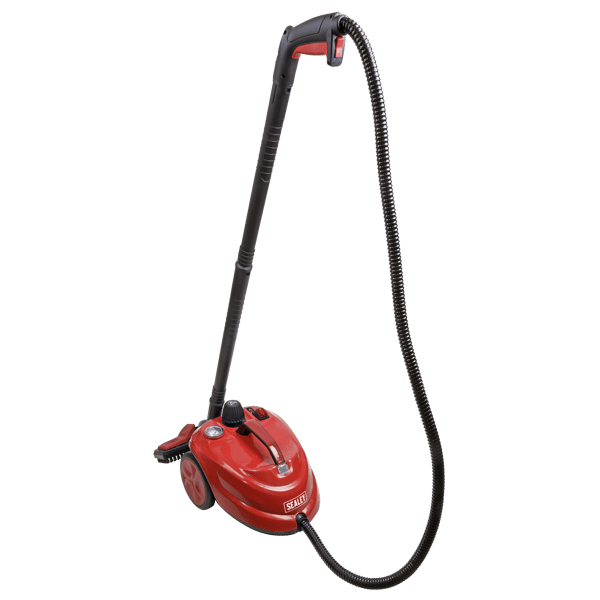 Not yet ratedSealey1.8L Steam Cleaner 2000W/230V
- 2000W, 230V, 1.8L tank
- 8 min heat-up time, IPX4 rated
€304.36€307.44€247.45€249.95
Pressure and boiler capacity matter more than wattage. A 3-bar unit with a 1.8-litre boiler gives you twelve to fifteen minutes of continuous steam; below 2 bar you're essentially wetting the surface rather than cutting through grease. Check the nozzle attachments — a detail brush works for door seals and panel gaps, a wide floor tool for concrete or tiled areas, and a brass brush head for baked-on carbon in engine bays or ovens.
Descale the boiler every forty to fifty hours of use if you're on hard water; calcium buildup chokes the element and drops pressure. Most machines have a purge valve — open it cold, drain off sediment, rinse with distilled water. Replace seals and gaskets annually on heavy-use machines; steam leaks around the cap or trigger mean the rubber has perished. Store the unit empty and dry; leaving water in the boiler between jobs accelerates corrosion and shortens the heating-element life.
For workshop or commercial cleaning where you're running the machine daily, choose a model with a separate boiler chamber so you can top up mid-session without waiting for the pressure to drop. Domestic-rated cleaners with fixed tanks need a cool-down period before refilling — fine for occasional car valeting, frustrating if you're halfway through a tiled floor.