
Hi. What are you looking for? Tell us what you need and we'll get back to you.
Ramps
Ramps for loading equipment, raising vehicles, and levelling uneven ground. Portable aluminium loading ramps handle everything from mowers to pallet trucks. Tyre savers and levelling ramps lift cars and vans to working height or compensate for sloped floors. Check the load rating — single-ramp capacity vs. per-pair capacity matters when you're splitting weight unevenly.
Showing all 3 results
-
 Not yet ratedSealeyLevelling Ramps - 3-Stage 2.5 Tonne Capacity per Ramp 5 Tonne Capacity per Pair
- 5 Tonne capacity per pair
- 3-stage heights: 40/70/100 mm
€59.30€59.90€48.21€48.70 -
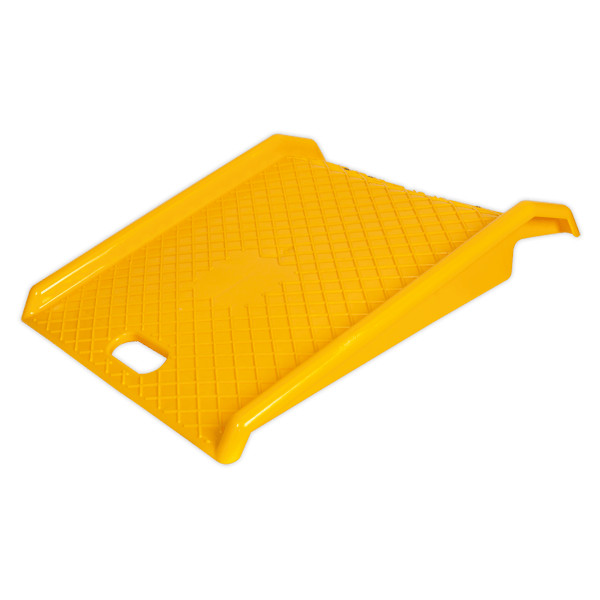 Not yet ratedSealeyPortable Access Ramp 450kg Capacity
- 450kg capacity
- 600mm wide textured surface
- Carry handles + rubber stoppers
€115.25€93.70 -
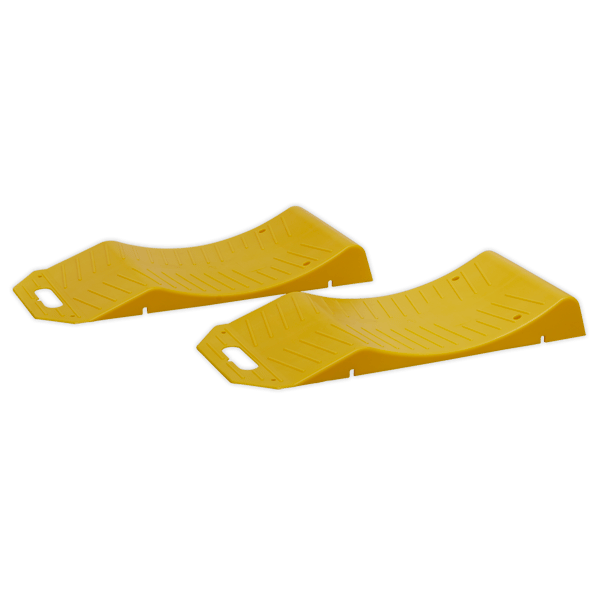 Not yet ratedSealeyTyre Savers - 2.5 Tonne Capacity per Ramp 5 Tonne Capacity per Pair
- 5 tonne capacity per pair
- 205 mm wide surface
- Prevents tyre flat spots
€36.47€36.84€29.65€29.95
Pick ramps by job and weight. Portable access ramps are for loading: moving kit onto trailers, into vans, or over kerbs. Aluminium keeps weight down without sacrificing a 450 kg capacity — enough for ride-on mowers, small plant, or heavy toolboxes. Folding or lightweight models stow behind a van bulkhead; heavier-duty frames sit flatter under load and resist flex.
Tyre savers and levelling ramps are for static lifting. Tyre savers are low-angle wedges that roll a vehicle up a few inches — quick access to sills, jacking points, or undertray bolts without pulling the full jack out. Three-stage levelling ramps do the same job but with separate height steps, useful if the floor slopes or one side of the bay sits lower. Both types quote capacity per ramp and per pair; if the vehicle's weight sits off-centre (fuel tank one side, toolboxes the other), use the single-ramp figure as your limit.
Material matters less than geometry. Plastic ramps grip well on smooth concrete and shed mud easily; they can deform under sustained load in hot weather. Aluminium ramps stay rigid but need textured tread or grit coating to stop tyres slipping on wet days. For repetitive use, check the ramp's top edge — sharp transitions snag low-slung bumpers or mudguards; a curved or tapered entry rolls on without catching.