
Hi. What are you looking for? Tell us what you need and we'll get back to you.
Tow Poles & Ropes
Tow poles and tow ropes for moving non-roadworthy vehicles, stuck plant, or trailers short distances. Poles are rigid, give precise control in tight spaces, and won't sag or snag on the ground. Ropes are lighter, pack smaller, and absorb shock better on uneven surfaces. Match the rolling-load capacity to the vehicle weight — a 2000 kg rope is fine for a car, but undersized for a loaded van or tractor. Check the towing eyes on both vehicles before you connect anything.
Showing all 2 results
-
10% OFF
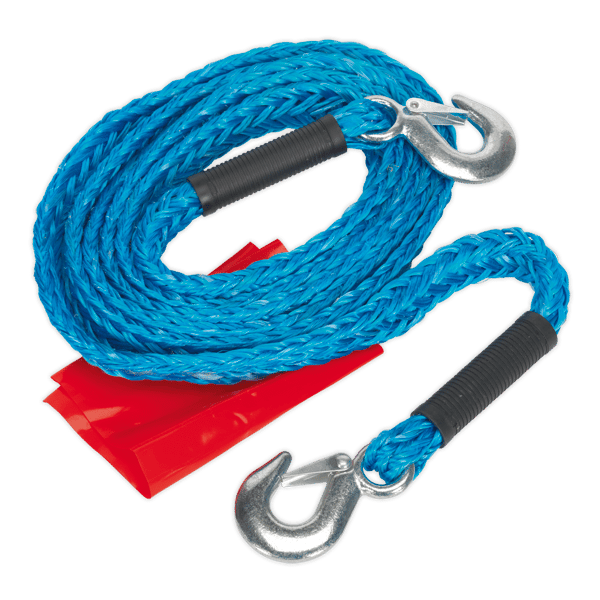 Not yet ratedSealeyTow Rope 2000kg Rolling Load Capacity
- 4m length
- 2 tonne rolling load capacity
- Non-elastic rope, metal hooks
€26.24€29.15€21.33€23.70 -
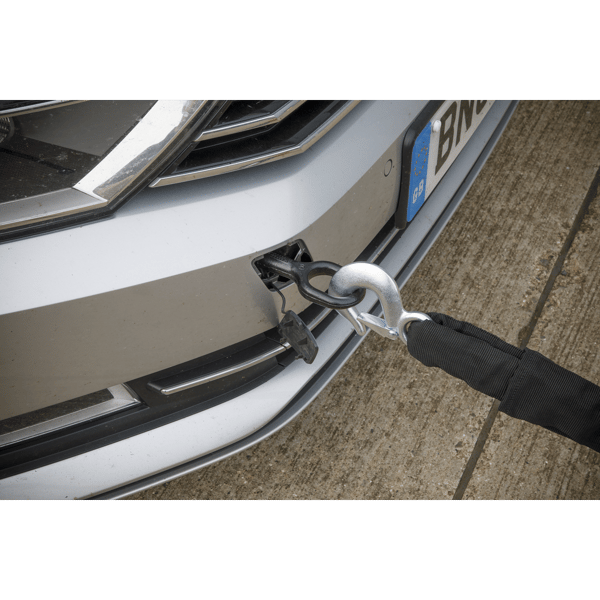 Not yet ratedSealeyTow Rope 5000kg Rolling Load Capacity
- 5 tonne rolling load capacity
- Elasticated webbing design
- Forged hooks, snap shackles
€133.89€135.24€108.85€109.95
Tow pole or tow rope? Poles keep the towed vehicle at a fixed distance, so you can reverse accurately or manoeuvre through a gate without the tow slackening and jerking. Most poles telescope for storage and lock at a set length. The shock-spring version absorbs some of the jolt when you take up drive — useful if you're pulling a vehicle with seized brakes off a ramp or mud. Ropes are easier to carry in the cab and handle rough ground better because they stretch slightly under load, but you lose that tight control. If the ground is rutted or the towed vehicle's brakes are gone, the rope will surge and slacken every time you change speed.
Capacity and attachment. Rolling-load capacity is lower than the vehicle's kerb weight because you're moving it on wheels, not lifting it. A 2000 kg rope suits most cars; 3000 kg covers vans and light trailers; 5000 kg is for plant or goods vehicles. Check the towing eyes are rated and bolted through the chassis — bumper-mount eyes are often cosmetic. Loop the rope or hook the pole so it can't come off under slack. If the towed vehicle has no steering or brakes, keep the distance short and the speed walking pace.