
Hi. What are you looking for? Tell us what you need and we'll get back to you.
Retracting Hose Reels
Retracting hose reels wind an air hose back onto the drum after use, clearing floor space and preventing kinks or snags. They mount to walls, ceilings, or mobile workbenches, keeping the supply hose off the shop floor. Pick the reel by hose length, internal diameter, and whether you want spring-driven auto-rewind or manual control over the retraction speed.
Showing all 17 results
-
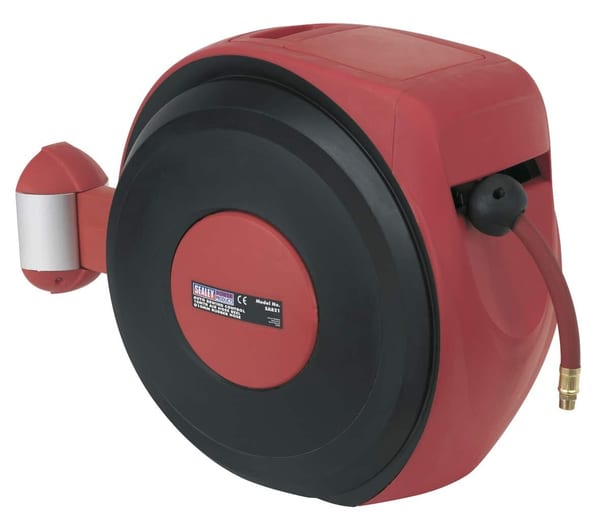 Not yet ratedSealey10m Auto-Rewind Control PU Air Hose Reel 8mm ID
- 10m PU hose, 8mm ID
- Auto-layering mechanism
- Wall-mount swivel bracket
€228.26€230.56€185.58€187.45 -
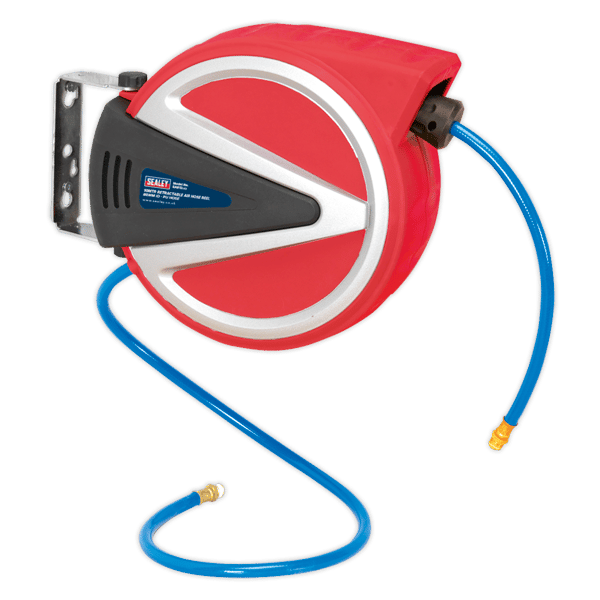 Not yet ratedSealey10m Retractable PU Air Hose Reel 8mm ID
- 10m double braided PU hose
- 8mm ID, 1/4″BSP connections
- Auto-layering mechanism
€205.42€207.50€167.01€168.70 -
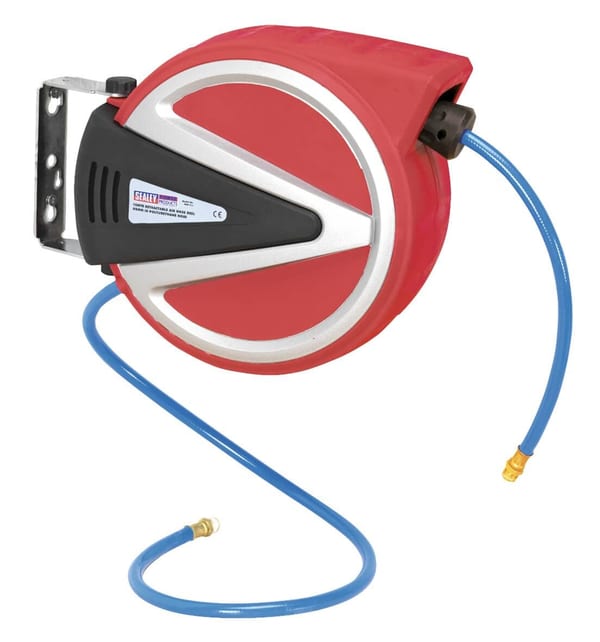 Not yet ratedSealey12m Retractable PU Air Hose Reel 6.5mm ID
- 12m double braided PU hose
- Auto-layering mechanism
- 150 psi max pressure
€190.21€192.13€154.64€156.20 -
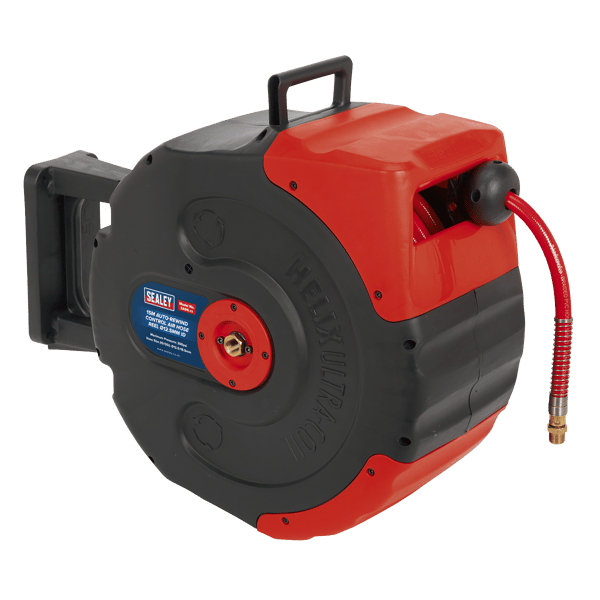 Not yet ratedSealey15m Auto-Rewind Control Air Hose Reel 12.5mm ID
- 15m hose, 12.5mm ID
- Controlled rewind mechanism
- Reinforced PVC braided hose
€456.58€461.19€371.20€374.95 -
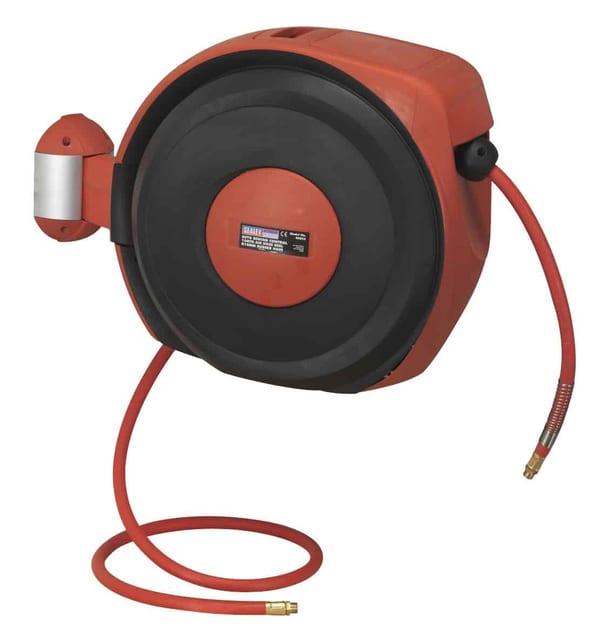 Not yet ratedSealey15m Auto-Rewind Control Rubber Air Hose Reel 10mm ID
- 15 m rubber hose, 10 mm ID
- Controlled slow rewind mechanism
- Auto-layering prevents jamming
€304.36€307.44€247.45€249.95 -
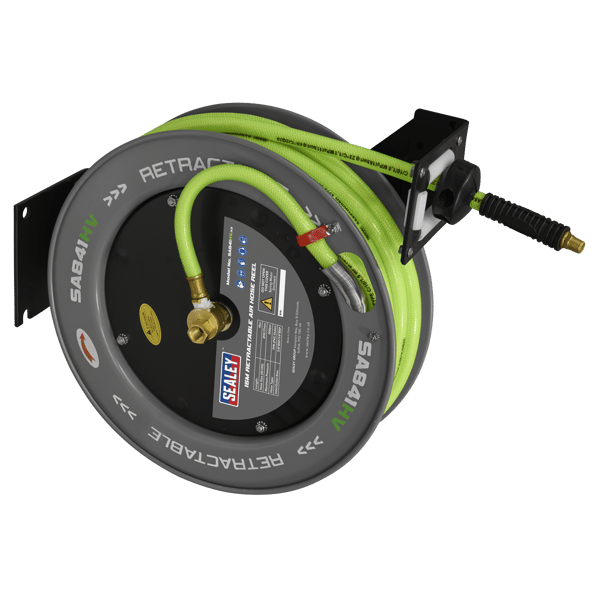 Not yet ratedSealey15m Retractable High-Visibility TPR Air Hose with Metal Reel 10mm ID
- 15m TPR hose, 10mm ID
- 300psi max pressure
- Multi-position ratchet lock
€319.59€322.81€259.83€262.45 -
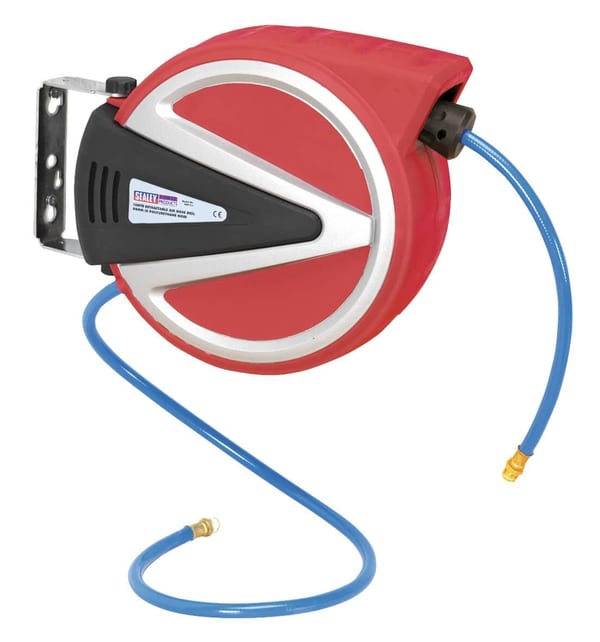 Not yet ratedSealey15m Retractable PU Air Hose Reel 8mm ID
- 15m double braided PU hose
- 8mm ID, 1/4" BSP connections
- Auto-layering mechanism
€228.26€230.56€185.58€187.45 -
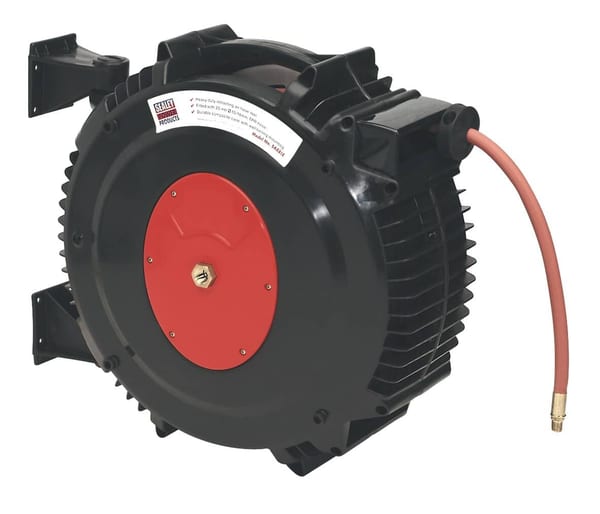 Not yet ratedSealey15m Retractable Rubber Air Hose Reel 13mm ID
- 15m rubber hose, Ø13mm ID
- 1/2″ BSP inlet + outlet
- Brass swivel connector
€669.67€676.44€544.45€549.95 -
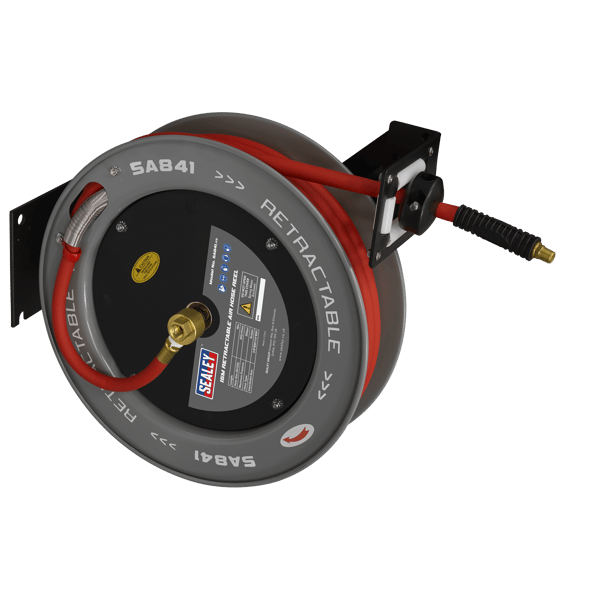 Not yet ratedSealey15m Retractable Rubber Air Hose with Steel Reel 10mm ID
- 15m rubber hose, 10mm ID
- Steel reel, powder-coated finish
- 1/4" BSP outlet, 300psi max
€319.59€322.81€259.83€262.45 -
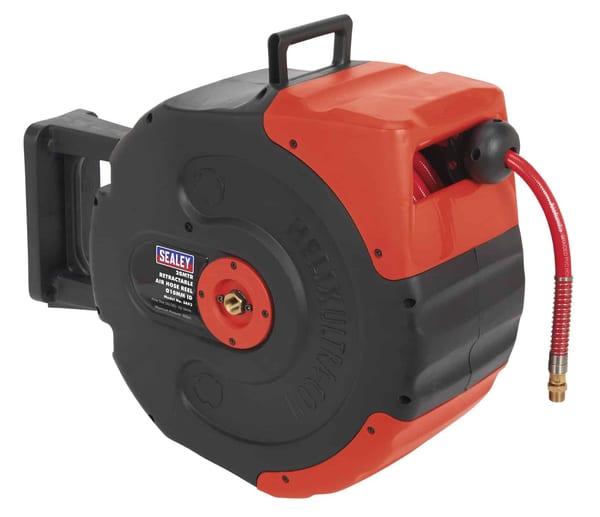 Not yet ratedSealey20m Auto-Rewind Control Air Hose Reel 10mm ID
- 300psi max pressure
- Wall bracket + 2m inlet hose
€441.36€445.81€358.83€362.45 -
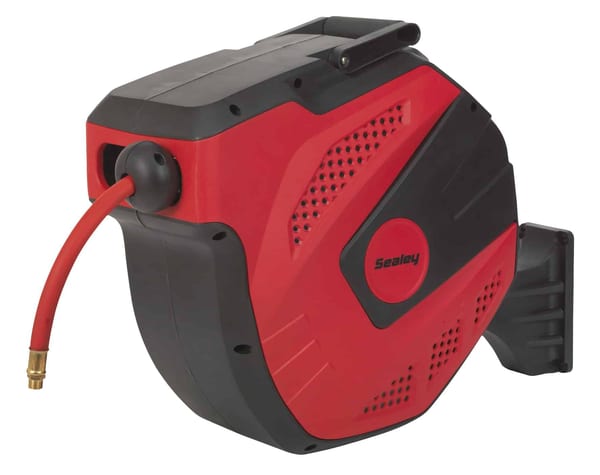 Not yet ratedSealey20m Auto-Rewind Control Rubber Air Hose Reel 10mm ID
- 20 m rubber hose, 10 mm ID
- Controlled slow rewind mechanism
- Auto-layering, anti-jam design
€380.48€384.31€309.33€312.45 -
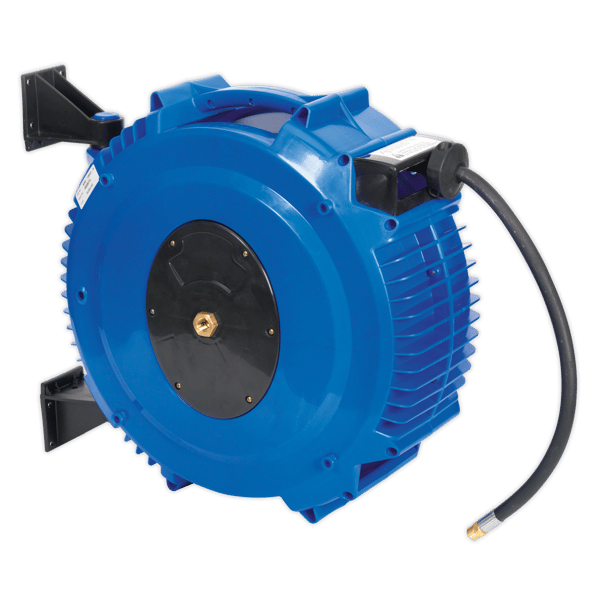 Not yet ratedSealey20m Retractable Rubber Air Hose Reel 10mm ID
- 20m rubber hose, Ø10mm ID
- 1/4″ BSP outlet, 3/8″ BSP inlet
- 250 psi max pressure
€461.19€374.95 -
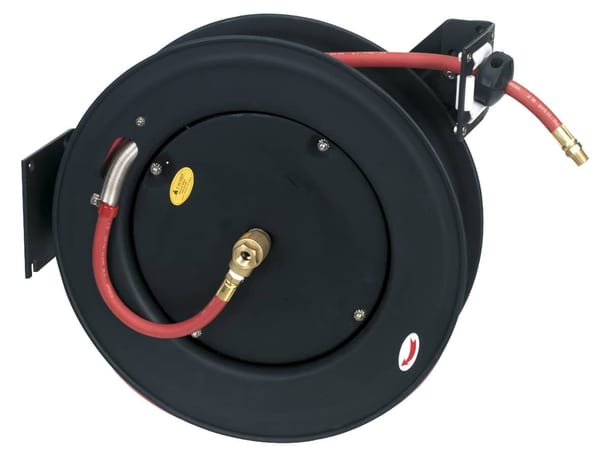 Not yet ratedSealey20m Retractable Rubber Air Hose with Steel Reel 10mm ID
- 20m rubber hose, Ø10mm ID
- Steel reel, powder-coated finish
- 1/4″ BSP outlet, 3/8″ BSP inlet
€410.92€415.06€334.08€337.45 -
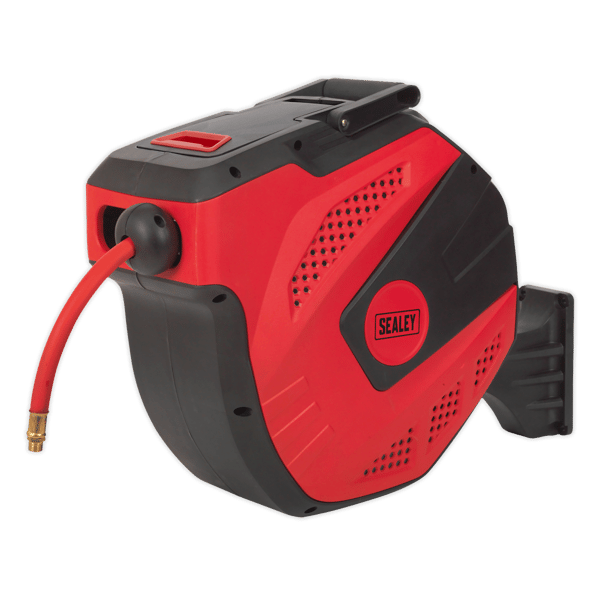 Not yet ratedSealey30m Auto-Rewind Control Rubber Air Hose Reel 10mm ID
- 30m rubber hose, 10mm ID
- Auto-rewind, controlled speed
- Auto-layering, prevents jamming
€456.58€461.19€371.20€374.95 -
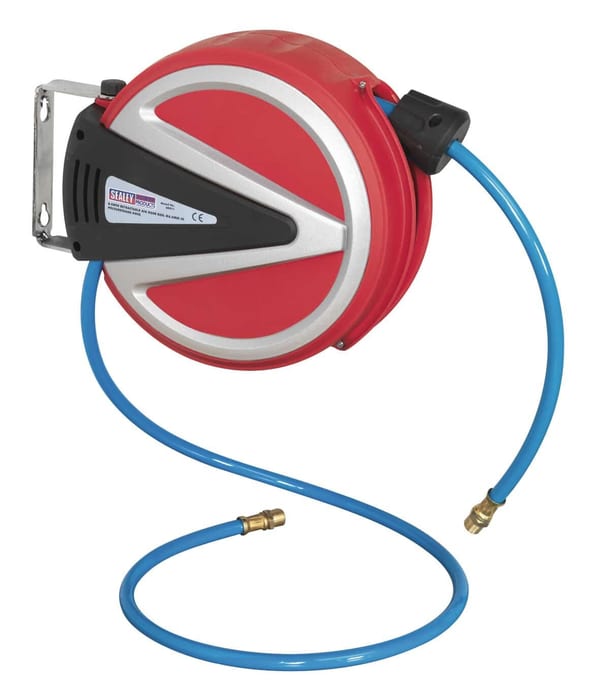 Not yet ratedSealey6.5m Retractable PU Air Hose Reel 6.5mm ID
- 6.5m double braided PU hose
- Auto-layering mechanism
- Max pressure 150psi
€121.71€122.94€98.95€99.95 -
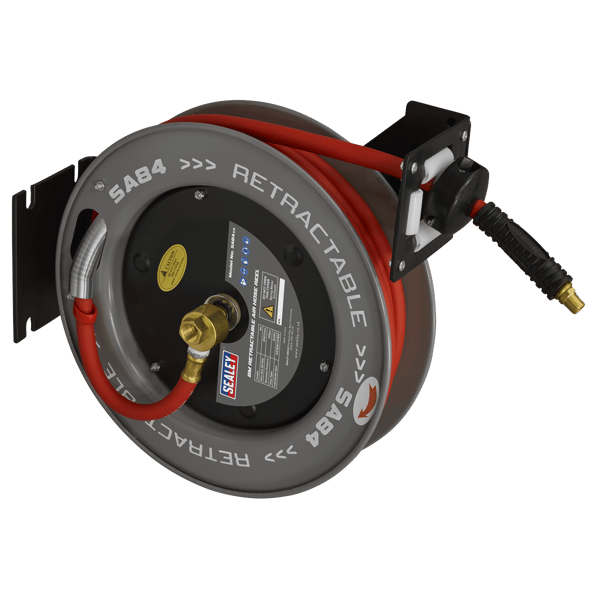 Not yet ratedSealey8m Retractable Rubber Air Hose with Steel Reel 10mm ID
- 8m rubber hose, 10mm ID
- Steel reel, powder-coated finish
- 1/4" BSP outlet, 1/4" connectors
€228.26€230.56€185.58€187.45 -
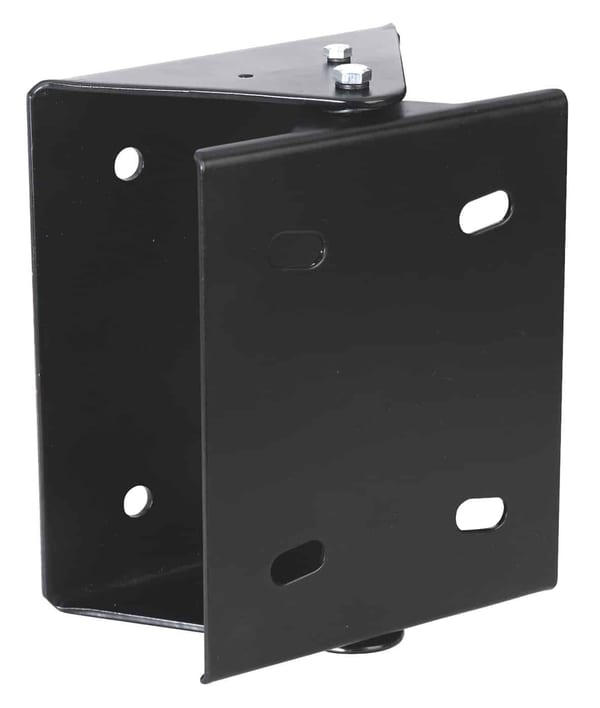 Not yet ratedSealeySwivel Plate for SA84, SA841, SA841HV & SA85
- Wall or ceiling mount
- Fits SA84, SA841, SA841HV, SA85
- Swivel plate, 2.82 kg
€54.74€55.29€44.50€44.95
Hose length determines reach from the compressor or manifold. Measure the working area and add a margin — a 15 m reel suits a single bay, 20–30 m spans larger workshops or outdoor yards. Longer reels are heavier and need solid mounting.
Internal diameter affects flow. A 10 mm ID hose handles most air tools up to 14 CFM at 90 PSI. A 13 mm ID reduces pressure drop on longer runs or when running high-demand tools like die grinders or dual-action sanders back-to-back. The reel drum must match the hose ID; you cannot swap a 10 mm hose onto a 13 mm reel body without losing wind tension.
Auto-rewind reels use a coil spring inside the drum to pull the hose back when you tug the end fitting. The spring winds as you pull, then releases when you stop. Some models have a ratchet lock that holds the hose at set intervals; others retract constantly under light tension. Manual-control reels let you guide the hose back at your own speed, useful if the tool or coupling is heavy and you don't want it slapping the drum.
Rubber hose resists abrasion better than PVC and stays flexible in cold sheds or outdoor use. Steel reels take knocks and UV exposure better than plastic housings. Check the drum rotates freely before you load it — a bent axle or debris in the bearing will jam the spring or make the hose bunch on one side. Mount the reel so the hose outlet faces the work area; pulling at an angle loads the swivel unevenly and wears the seal.
Frequently asked questions
What is the difference between an auto-rewind air hose reel and a manual-control reel?
Auto-rewind reels use a coil spring inside the drum to pull the hose back when you tug the end fitting, and some models have a ratchet lock to hold the hose at set intervals. Manual-control reels let you guide the hose back at your own speed, which is useful if the tool or coupling is heavy and you don't want it slapping the drum.
Can I use a retractable air hose reel with a garden hose or water supply?
No, retractable air hose reels are designed for compressed air from a compressor or manifold, not water. The seals, fittings, and hose material are made for air pressure and flow, not continuous water contact.
What hose length do I need for a single workshop bay versus a larger yard?
A 15 m reel suits a single bay, while 20 m or longer spans larger workshops or outdoor yards. Measure your working area and add a margin to account for the path the hose will take from the reel to the tool.
Why does internal diameter matter when choosing a retractable air hose reel?
Internal diameter affects airflow and pressure. A 10 mm ID hose handles most air tools up to 14 CFM at 90 PSI, while a 13 mm ID reduces pressure drop on longer runs or when running high-demand tools like die grinders or dual-action sanders back-to-back.
Can I swap a 10 mm hose onto a reel designed for 13 mm hose?
No, the reel drum must match the hose internal diameter. Swapping a 10 mm hose onto a 13 mm reel body will lose wind tension and the hose will not retract properly.
What type of hose material works best in cold sheds or outdoor use?
Rubber hose resists abrasion better than PVC and stays flexible in cold sheds or outdoor use. Steel reels also take knocks and UV exposure better than plastic housings.
How should I mount a retractable air hose reel to avoid wear on the swivel?
Mount the reel so the hose outlet faces the work area. Pulling the hose at an angle loads the swivel unevenly and wears the seal, causing leaks or stiff rotation over time.