
Hi. What are you looking for? Tell us what you need and we'll get back to you.
Voltage Testers & Detectors
Voltage testers and detectors let you check for live circuits before you touch anything. Non-contact detectors sense AC voltage through cable sheathing or switch covers — useful for tracing cables in walls or verifying a circuit is dead. Contact testers need direct connection to a terminal or conductor, giving a definite yes/no on whether mains voltage is present. Combination models include stud and metal detection, handy on site when you need to locate joists or pipes before drilling.
Showing all 4 results
-
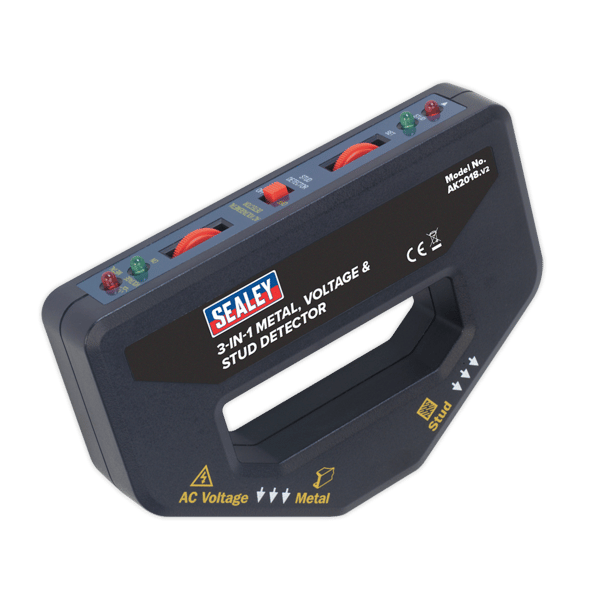 Not yet ratedSealey3-in-1 Metal, Voltage & Stud Detector
- Detects metal, voltage, studs
- LED + audible signal display
- 9V battery supplied
€45.61€46.06€37.08€37.45 -
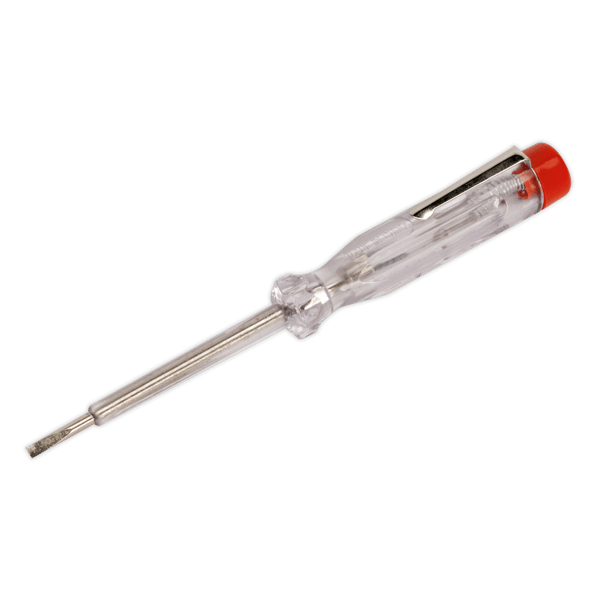 Not yet ratedSealeyMains Tester 140mm
- VDE Approved
- 100-250V testing range
- Screwdriver blade + pocket-clip
€3.59€3.63€2.92€2.95 -
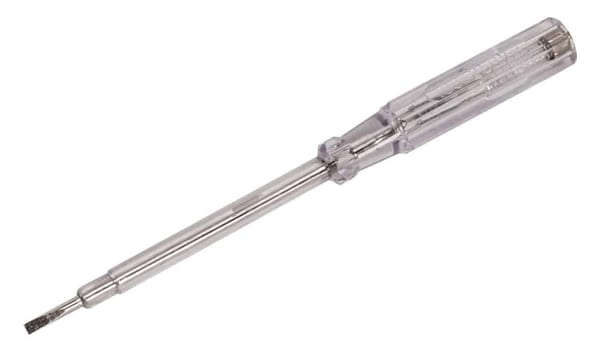 Not yet ratedSealeyMains Tester 190mm
- VDE approved mains tester
- 100-250V testing range
- Insulated handle + blade sheath
€6.03€6.09€4.90€4.95 -
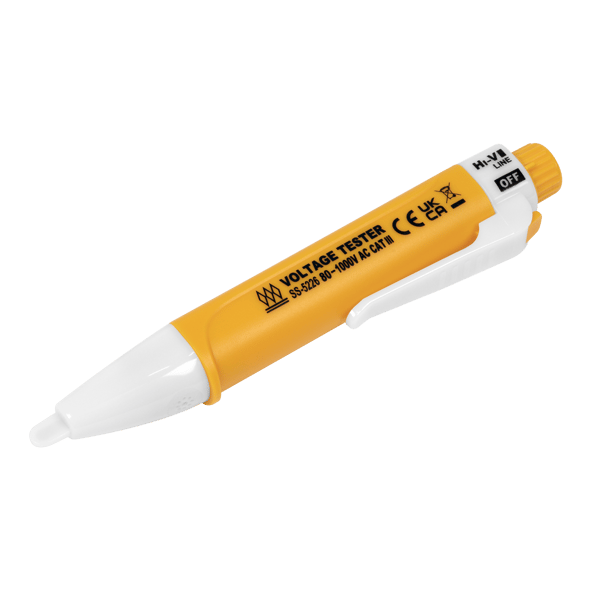 Not yet ratedPremierNon-Contact Voltage Detector 80-1000V
- 80-1000V range, dual sensitivity
- LED + audible indication
- Non-contact detection
€34.22€34.56€27.82€28.10
Non-contact detectors work by sensing the electromagnetic field around a live AC conductor. They're quick for checking sockets, light fittings, or following a cable run, but they can't confirm zero voltage — interference or capacitive coupling sometimes triggers a false positive. Use one to flag likely live circuits, then verify with a contact tester or meter if you're isolating for work. Most non-contact models cover 80–1000 V AC; check the rated range matches your typical supply.
Contact testers — the screwdriver-style mains testers here — complete a circuit through your body to a neon lamp or LED. They confirm mains presence reliably but depend on you providing a path to earth, so they won't indicate on floating or incorrectly wired circuits. The 190 mm and 140 mm lengths suit different pocket depths; the longer shaft reaches deeper terminal blocks without your hand crowding the enclosure. Insulation should meet IEC 61243-3 or equivalent; look for a voltage rating stamped on the barrel.
Three-in-one detectors combine non-contact voltage sensing with stud and ferrous-metal detection. The stud mode locates timber joists or battens by sensing density changes; metal mode flags steel conduit, nails, or rebar. Accuracy drops near corners or on lath-and-plaster walls — scan slowly and mark multiple passes. These units suit first-fix work where you're routing cables and need to avoid existing services, but they won't replace a dedicated moisture meter or rebar locator on precision jobs.