
Hi. What are you looking for? Tell us what you need and we'll get back to you.
Staplers & Nailers
Staplers and nailers for fixing sheet materials, upholstery, cable runs, insulation, and light framing. Covers manual tackers, pneumatic guns, and cordless models — pick based on fastener type, material thickness, and whether you need portability or sustained fire rate. Check throat depth and magazine capacity if you're working in tight spaces or running long jobs.
Showing all 2 results
-
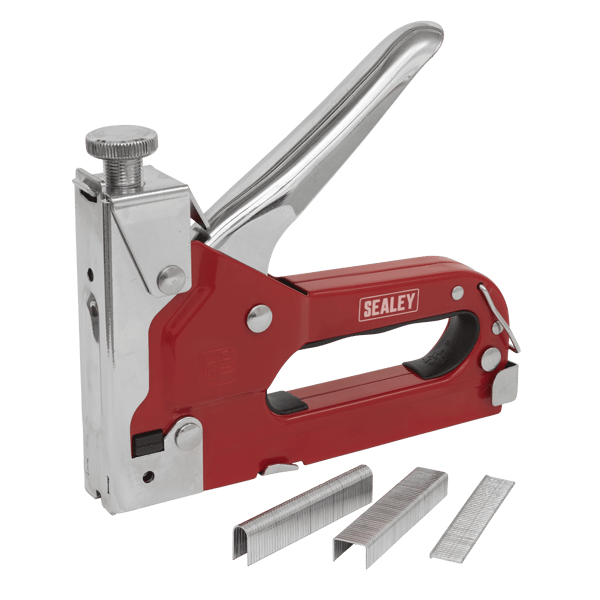 Not yet ratedPremierHeavy-Duty Staple & Brad Nail Gun
- 3-in-1 staple + brad nail gun
- Adjustable power control
- Removable sole plate
€37.99€38.38€30.89€31.20 -
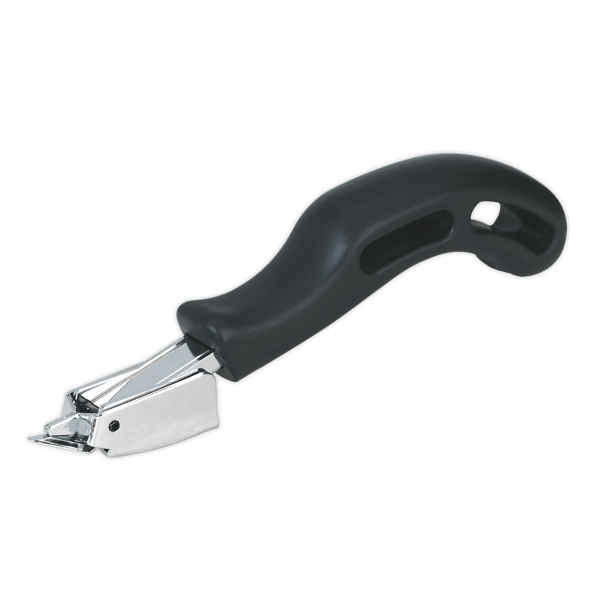 Not yet ratedPremierHeavy-Duty Staple Remover
- Removes heavy-duty staples
- Ergonomic handle
€14.86€15.01€12.08€12.20
Manual staplers suit occasional fixes and low-volume work — lighter, cheaper, no compressor. Pneumatic guns deliver faster cycling and consistent drive depth, useful for production runs or repetitive tasks like pallet repair and cable tray fixing. Cordless units split the difference: no air hose, decent fire rate, but limited by battery life and recharge time.
Match fastener gauge and crown width to the substrate. Narrow-crown brads hold trim and beading without splitting thin stock; wide-crown staples grip better in soft materials like insulation backer and geotextile. Check the leg length range — 10 mm pins won't anchor into 15 mm batten, and driving a 25 mm staple into 12 mm ply will blow through or buckle. Most guns accept a range within one gauge family; switching between brad and staple often means a nose change or separate tool.
Throat depth matters in corners and against flanges. A flush-nose tacker works tight to a right angle; a long-nose model reaches behind pipework but adds bulk. Magazine capacity affects how often you reload — 100-round strips are fine for small jobs, but 1000-round coil feed pays off on flooring or sheeting where stopping costs time. For plastic repair or tarp patching, hot staplers melt the fastener leg into thermoplastic; they won't grip hard materials and the weld cools brittle in UV, so use them for interim fixes, not structural load.