
Hi. What are you looking for? Tell us what you need and we'll get back to you.
Screwdrivers
Pneumatic screwdrivers for assembly work, service bays, and production lines where you're driving hundreds of fasteners a shift. Air tools deliver consistent torque without the weight or heat buildup of electric drivers. The pistol-grip models suit bench assembly and panel work; inline composite bodies work in tighter access. Check the free speed and torque range against your fastener spec — most air screwdrivers run 800–2500 RPM and handle M3 to M8 machine screws or self-tappers.
Showing all 2 results
-
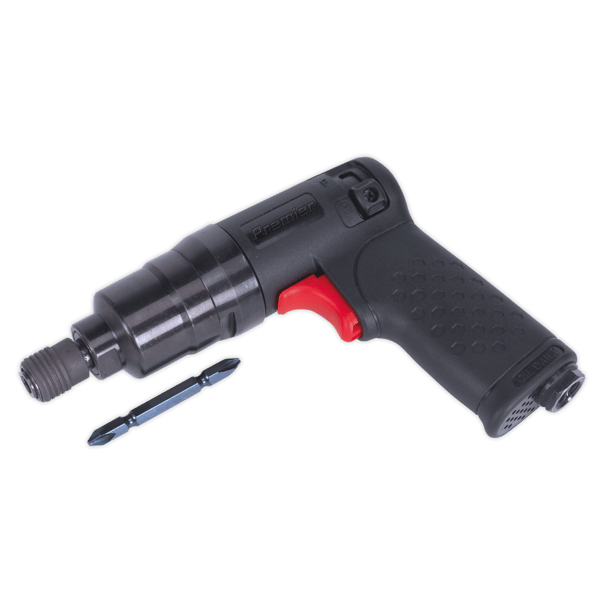 Not yet ratedPremierComposite Mini Air Screwdriver
- 1/4" Hex quick release chuck
- 11,000 rpm, 600 lb.in torque
- Composite lightweight housing
€159.76€161.38€129.89€131.20 -
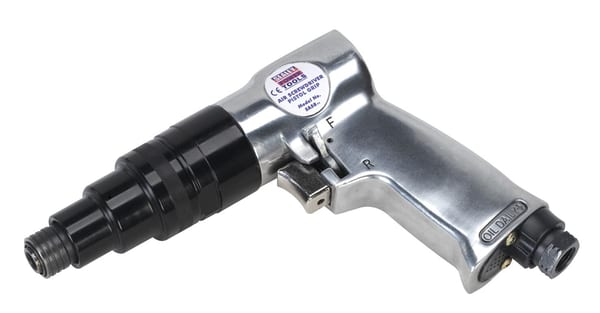 Not yet ratedSealeyPistol Grip Air Screwdriver
- Pistol grip, air operated
- 115 lb.in max torque
- 1/4" Hex quick release chuck
€121.71€122.94€98.95€99.95
Pick the tool by grip style and torque output. Pistol-grip models give better control on heavier fasteners and longer runs; inline composite drivers suit repetitive work where fatigue matters. Both types need clean, dry air at around 6 bar — moisture and debris will kill the vanes quickly, so run a filter-regulator-lubricator upstream if you don't already. Most tools ship without a quick-coupler; match the plug type to your existing fittings to avoid adaptor stacks that leak pressure.
Torque adjustment usually sits at the base of the handle or behind the air inlet. Set it low and test on scrap before committing to the job — air screwdrivers don't have electronic clutches, so over-torque strips threads or cracks housings with no warning. If you're working to a spec (aerospace brackets, electronics enclosures), verify final torque with a beam wrench or clicker. Free speed tells you how fast the bit spins unloaded; actual driving speed drops under load, especially near stall torque. For production work, higher free speed reduces cycle time without sacrificing control if you're used to the trigger.
Bit retention is either magnetic or a collet. Magnetic chucks are faster to swap but won't hold in high-vibration applications; collets grip harder and suit impact-rated bits. Standard 1/4" hex fits most driver bits, but check the shank length — some composite tools have shallow recesses that won't seat long security bits. Keep spares of the exhaust deflector and air inlet screen; both clog with shop dust and cutting swarf, and a blocked exhaust back-pressures the motor.