
Hi. What are you looking for? Tell us what you need and we'll get back to you.
Nailers/Staplers
Nailers and staplers for fastening sheet goods, trim, cladding, and upholstery. Pneumatic models run off workshop compressor lines — faster cycle rates than hand tackers, less fatigue over repetitive jobs. Pick the tool by fastener type and length range: dedicated nailers for brads and finish nails, staplers for wide-crown staples, combination guns if you switch between both. Check throat depth and magazine capacity against the run length.
Showing all 3 results
-
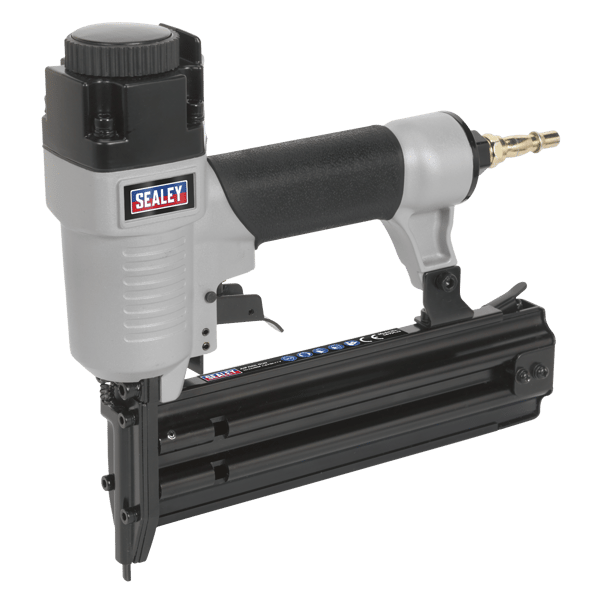 Not yet ratedSealeyAir Nail Gun 10-50mm Capacity
- 100-nail magazine w/ indicator
- Aluminium body, rubber grip
- 60-100 psi operating pressure
€109.53€110.64€89.05€89.95 -
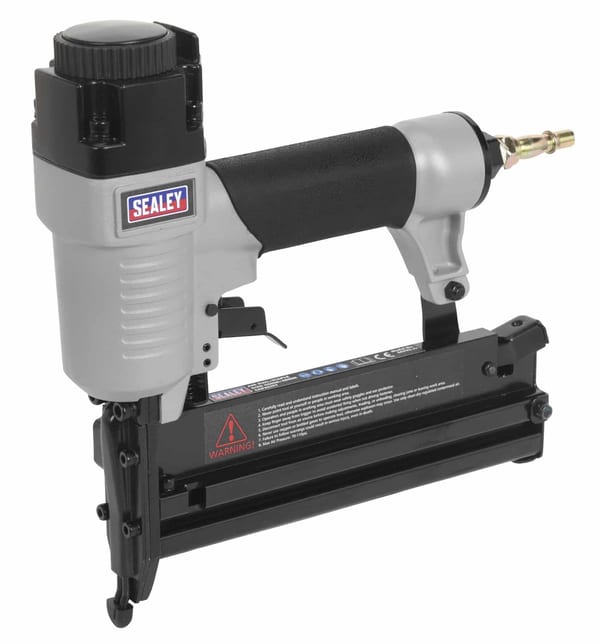 Not yet ratedSealeyAir Nail/Staple Gun 10-50mm/10-40mm Capacity
- Aluminium body, rubber grip
- Nails 10-50mm, staples 13-40mm
- Operating pressure 60-116psi
€114.09€115.25€92.76€93.70 -
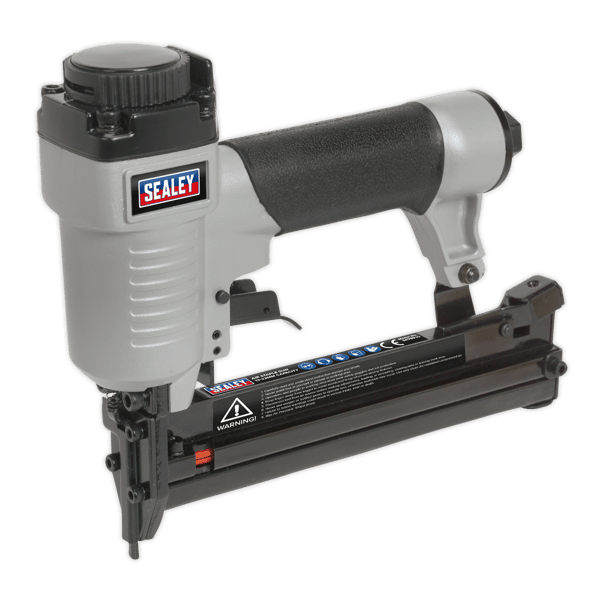 Not yet ratedSealeyAir Staple Gun 13-32mm Capacity
- Aluminium body, rubber grip
- Staple capacity 13-32mm 18SWG
- Safety trigger device
€101.92€102.95€82.86€83.70
Pneumatic nailers drive fasteners with compressed air — typically 60–100 psi from a workshop compressor. Trigger response is faster than a hand tacker and there's no arm strain over long runs of fencing staples or trim nails. Most guns are single-fastener: a nailer takes coil or strip nails, a stapler takes staples, a combination tool handles both if you swap the nose and magazine.
Match the capacity range to the work. A 10–50 mm nailer covers skirting, architrave, and light cladding; shorter ranges suit upholstery tacks and panel pins. Staple guns list the leg length — 13–32 mm handles most sheet fixing and cable runs. Check the crown width if you're stapling insulation or membrane; narrow-crown staples (around 5 mm) are less visible in trim, wide-crown (10 mm and up) spread the load in softer material.
Magazine capacity matters on repetitive jobs. A 100-fastener strip is fine for occasional use; 5000-count bulk packs keep a production line running. Depth adjustment — usually a thumbwheel near the nose — sets how far the fastener sinks. Too shallow and the head sits proud; too deep and you tear the substrate. Check the exhaust direction: side-exhaust blows dust away from the operator, rear-exhaust can catch you in the face if you're working overhead.
Regular oil in the air line keeps the piston seals supple. A stuck driver or misfires usually mean dried seals or low pressure. Keep the nose clean — resin and splinters jam the feed. If you're switching fastener lengths, check the manual; some guns need a different spring or driver pin for the full range.