
Hi. What are you looking for? Tell us what you need and we'll get back to you.
Surge Protection
Surge protectors for 12V and 24V vehicle electrics prevent voltage spikes during jump-starting or battery charging from damaging onboard electronics. They sit inline between charger and battery, clamping transient over-voltage before it reaches modules, ECUs, or infotainment units. If you work on modern light commercials, agricultural machinery, or any vehicle where a charging mishap could write off a control unit, a surge device is cheaper than one replacement ECU.
Showing all 2 results
-
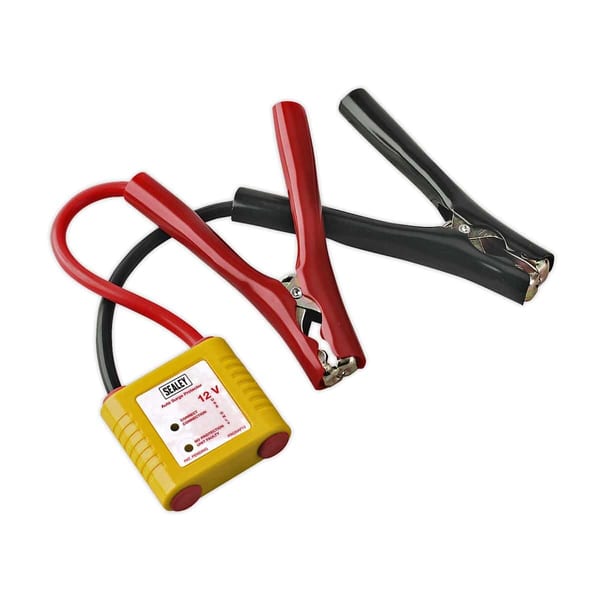 Not yet ratedSealey12V Auto Electronics Protection Device
- 12V system voltage
- Composite case, battery clips
- Status lights: green/red
€126.27€127.55€102.66€103.70 -
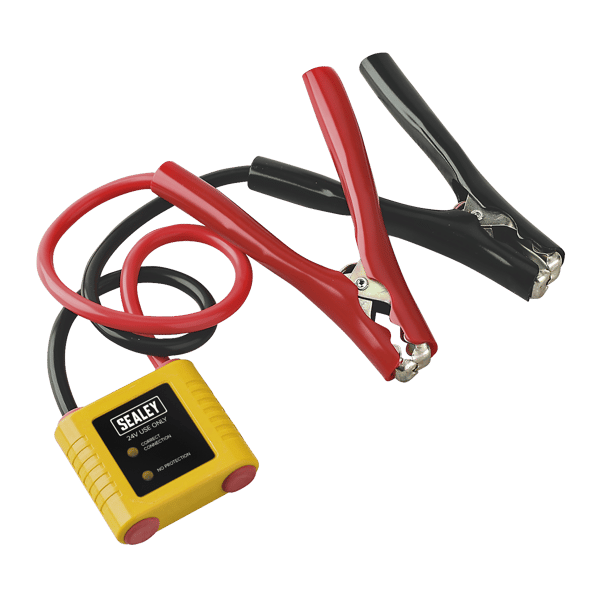 Not yet ratedSealey24V Auto Electronics Protection Device
- 24V system voltage
- Composite case, battery clips
- Green/red fault indicator light
€228.26€230.56€185.58€187.45
Voltage spikes happen when you connect or disconnect a charger under load, when alternator regulation fails, or during a botched jump-start. Modern vehicles run sensitive electronics at tight tolerances — many modules will tolerate a brief excursion to 16V, but a 30V transient from inductive kickback or a poor earth can kill them outright. A surge protector clamps the peak and dissipates the energy, typically using metal-oxide varistors or zener arrays.
Match the voltage rating to your vehicle system: 12V units for cars, vans, and light plant; 24V for trucks, larger agricultural kit, and some construction machinery. The device connects in series with the positive lead — charger to protector, protector to battery. Most models are passive and require no setup; they simply conduct normal current and react when voltage exceeds the clamp threshold, usually around 15–16V for 12V systems and 30–32V for 24V.
Check the continuous current rating if you run high-output chargers or welders from the same supply — underspeccing the protector will cause it to overheat or fail open. Look for units with a status indicator if you want confirmation that the device is live and hasn't sacrificed itself absorbing a previous surge. Once a varistor clamps a serious spike, its characteristics degrade; some designs include a thermal fuse that disconnects the unit rather than letting it conduct in a damaged state.